I noticed Heha Movers while auditing a Google Ads account for a moving company in Nairobi. The account targets competitor and moving-related searches, and the name kept appearing in the search-term data.
What caught my attention was not just the number of impressions. It was the gap between impressions and clicks. During one seven-day period, ads were shown roughly 200 to 300 times for searches associated with the name, but very few people clicked the advertiser’s ad.
That does not mean Heha Movers receives 200 to 300 searches every week. A Google Ads impression records an occasion when an ad was shown, and the number depends on match type, targeting, geography, budget, ad rank and other campaign settings. It is not the same as independent search-volume data. A low click-through rate also does not prove that searchers wanted to hire Heha Movers. They may have been looking for videos, news, contact details or information about the people behind the joke.
Even with those limitations, the pattern is useful. People were not only watching the clips in their feeds. Some were leaving social media and searching the name on Google. That is a stronger brand signal than passive video views, although it should be treated as evidence of curiosity and recognition, not automatic proof of demand.
When I searched the name, I found substantial social content and coverage from outlets including Citizen Digital and Mpasho. What I did not find was a clearly verified, creator-owned website where someone could understand the brand, contact the team, request a collaboration or confirm whether an actual moving service exists.
That gap is the real business lesson.
How Heha Movers became a recognisable name
Heha Movers is a satirical comedy concept from Kibera. The sketches use exaggerated corporate language, luxury-relocation promises and impossible service claims, all delivered with a straight face.
The character commonly identified as Mr. Wahio presents himself as the company’s young chief executive. The crew’s services extend far beyond moving. Depending on the sketch, they may offer loans, repairs, relationship mediation, digital privacy or other deliberately absurd solutions.
The line that travelled furthest was simple:
Tuachie keys. Tuekee password
The phrase works because it compresses an entire customer promise into two words. Hand over the keys and let someone else handle the stressful part. In the sketches, that promise is ridiculous. As a piece of branding, it is memorable.

Citizen Digital reported in August 2026 that the group had converted its online popularity into commercial opportunities and credited its mentor and manager, Big Fish, with helping the creators secure brand deals and monetise their work. Mpasho also described the group as moving from internet satire into corporate partnerships. Those reports support the conclusion that the attention has commercial value, even if the terms and value of individual partnerships are not public.
At a glance
- What happened: A Kibera comedy group went viral in Kenya with deadpan sketches built around a fictional luxury moving company.
- The search signal: A Nairobi moving campaign recorded hundreds of ad impressions connected with the Heha Movers name during one week. This indicates brand recognition and curiosity, not verified national search volume or confirmed buying intent.
- The commercial signal: Kenyan media have reported that the group has secured brand partnerships and begun monetising its audience.
- The domain issue: As of 27 August 2026, hehamovers.co.ke displayed content about the group and invited offers to acquire the domain. The public page does not establish who registered it, when it was registered or whether the registrant has independent rights in the name.
- The opportunity: The creators could formalise ownership, build an official digital home and decide whether Heha Movers remains an entertainment property, becomes a real service business or develops into both.
What brand searches actually tell us
There is a meaningful difference between someone seeing a video and someone searching for a name. Search requires an additional action. It may indicate that the person wants context, contact information, more content or a way to engage with the brand.
It does not, by itself, establish commercial intent.
The best next step would be to validate the signal using several sources:
- Review the exact Google Ads search terms, match types, locations and dates.
- Check Google Trends for the timing and geography of interest.
- Use Search Console on an official website once one exists.
- Track direct enquiries, collaboration requests and moving-service requests separately.
- Compare branded searches with searches such as “movers in Nairobi” and “moving company Kenya.”
If people are mainly looking for videos, the immediate opportunity may be entertainment, licensing and merchandise. If they are requesting quotations or contact details, there may be a service opportunity. The data should decide which business gets built.
The corporate partnerships are the clearest proof so far
Media coverage confirms that commercial partnerships followed the group’s rise. That is more defensible evidence of market value than treating ad impressions as customer demand.
Brands collaborate with creators for many reasons, including reach, cultural relevance, humour and short-term campaign attention. A partnership does not prove that a moving company would succeed, but it does show that the identity can generate revenue.
The creators therefore have at least three possible business models:
- An entertainment brand: Continue producing sketches and earn through campaigns, appearances and licensing.
- A brand platform: Add merchandise, events and carefully selected partnerships without operating a moving company.
- A real moving service: Partner with experienced operators and put verified logistics, insurance, customer support and service standards behind the name.
The third option carries the greatest operational and reputational risk. A viral name can attract the first customer, but it cannot pack a house safely, insure valuable property or resolve a damaged-goods claim.
The domain issue needs careful language
The matching .co.ke domain is active and is currently being offered for acquisition. That is verifiable from the public website.

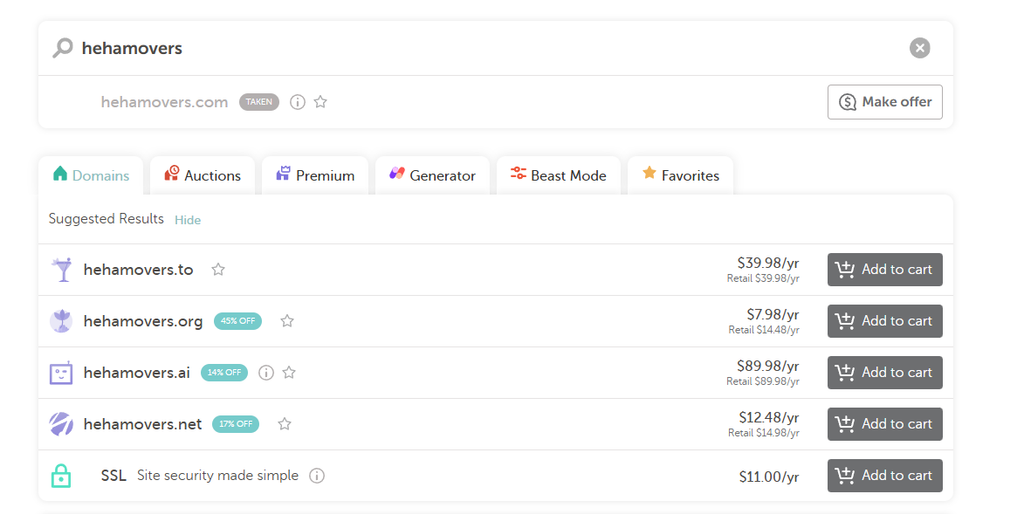
What is not yet publicly established is whether the registration is unlawful, whether it predates the creators’ use of the name, whether the registrant has a legitimate interest or whether the creators already have registered or unregistered rights that would support a complaint.
For that reason, it is premature to label the registrant a cybersquatter.
KeNIC explains that domain disputes can involve cybersquatting, reverse cybersquatting and legitimate competing claims. Its guidance lists several factors that may be relevant to bad faith, including whether a domain holder has offered the name for sale without intending to use it for genuine goods or services. KeNIC also considers whether the holder has its own rights, has made bona fide use of the name, or is making legitimate non-commercial or fair use. KeNIC’s domain-dispute guidance makes clear that the full factual record matters.
An offer to sell is therefore relevant evidence, but it is not automatic proof of abuse.
What the creators should establish first
Before negotiating for the domain or starting a formal dispute, the team should establish the facts.
1. Decide who owns the Heha Movers identity
The creators, manager and any production company should document who created the name, who owns the videos, who controls commercial licensing and who is authorised to file a trademark application.
This should be agreed in writing. Filing in the wrong person’s name could create a larger problem than the domain itself.
2. Preserve evidence of first use and public recognition
Useful evidence may include:
- Original video files and publication dates
- Social account records and analytics
- Contracts, invoices and brand-partnership correspondence
- Media coverage and interviews
- Artwork, logos and production files
- Messages or enquiries showing that the public associates the name with the group
The timeline matters because a domain dispute often turns on what rights existed when the domain was registered and what the registrant knew at that time.
3. Conduct a trademark search before filing
The Kenya Industrial Property Institute, or KIPI, administers trademark registration in Kenya. KIPI states that registration is direct evidence of ownership, while also recognising that rights may sometimes arise through use under common law. Registration is helpful, but it is not a shortcut that automatically defeats an earlier legitimate domain registration. KIPI’s trademark guidance explains the benefits and requirements.
A trademark professional should first search for conflicting marks and advise on ownership, registrability and classes. Depending on the actual business model, potentially relevant Nice classes may include:
- Class 39: Transport, packaging and storage services
- Class 41: Entertainment and cultural activities
- Class 25: Clothing, footwear and headwear, if branded merchandise is planned
Those examples are not a filing recommendation. The final specification should match the goods and services the owner genuinely uses or intends to use.
4. Verify the domain record and chronology
The team or its advocate should obtain the available registration details, confirm the registration date and preserve screenshots of the website’s acquisition offer.
Without the chronology, no one can responsibly assess whether the registration was opportunistic or legitimate.
Negotiate or file a dispute?
A negotiated transfer may be faster and less expensive than a formal dispute. However, the team should obtain legal advice before contacting the registrant. An unplanned approach can reveal urgency, increase the asking price or create statements that later complicate a dispute.
If negotiation is appropriate, it should be handled calmly and in writing. The team should avoid threats and avoid publicly accusing the registrant of unlawful conduct before the facts are known.
If negotiation fails, KeNIC provides an alternative dispute-resolution process for .ke domains. A complainant would need evidence supporting its rights and its allegation that the registration or use is abusive. Possible outcomes and requirements depend on the applicable policy and the facts. A Kenyan intellectual-property advocate should assess the case before filing.
This is not a free or guaranteed process. It can involve filing costs, professional fees, evidence preparation and an uncertain result. Buying the domain may sometimes be commercially sensible. In other cases, using a different official domain while pursuing a legal remedy may be safer.
Questions to answer before spending money
- Who owns the name, videos, characters and commercial rights within the group?
- When was the name first used publicly?
- When was the domain registered, and by whom?
- Does the registrant have its own legitimate connection with the name?
- Has anyone filed or registered a similar trademark?
- Is the priority entertainment, merchandise, brand partnerships or a genuine moving service?
- What would it cost to buy the domain, pursue a dispute or launch on a different domain?
- Who would operate and insure an actual moving business?
The bigger opportunity is bigger than the domain
The domain matters, but it is not the whole brand.
Heha Movers already has a recognisable name, a repeatable creative concept, media coverage and evidence that companies are willing to collaborate with the group. The Google Ads data adds another useful signal: some people are actively searching the name instead of only encountering it in social feeds.
The safest conclusion is not that a fully formed moving business is waiting to be claimed. It is that the group has created a valuable piece of attention and now needs to decide what that attention should become.
The practical next steps are straightforward:
- Agree on ownership and decision-making.
- Preserve evidence of first use and commercial activity.
- Conduct trademark and domain checks with qualified professionals.
- Create a verified official page, even if the preferred domain is unavailable.
- Separate entertainment enquiries from genuine moving-service enquiries.
- Test demand before investing in vehicles, staff and logistics.
- Build the business model that the evidence supports.
The original draft of the opportunity was right about one thing: online attention has a short shelf life..in Kenya it’s even shorter. The strongest move is not to rush into a domain fight or declare a new moving company overnight. It is to secure the rights that can be secured, verify the demand and build an official home before the public loses interest.
This article offers marketing analysis and general information, not legal advice. Anyone considering a trademark application or domain dispute should consult a qualified Kenyan intellectual-property professional.