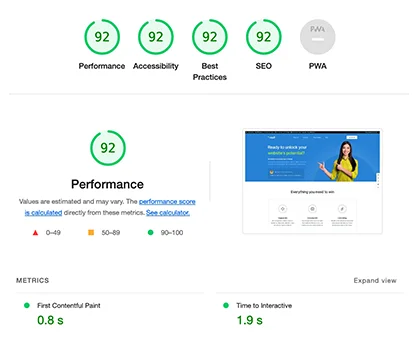
Many Nairobi businesses spend significant amounts monthly on Jiji and PigiaMe ads that vanish the moment payment stops. Meanwhile, 86% (eighty-six percent) of Kenyans now use Google to find local businesses, searching for “restaurant near me” or “electrician near me” with urgent buying intent.
Local SEO builds an asset you own instead of renting visibility. The initial investment of KES 40,000 – KES 60,000 and ongoing monthly costs of KES 20,000 – KES 40,000 actually decrease your customer acquisition costs while the value compounds over time.
This guide covers five pillars that work specifically for Kenyan businesses, accounting for mobile-first searches, data costs, landmark-based navigation, and the trust barriers unique to our market. No generic Western advice. Just what works in Nairobi, Mombasa, Kisumu and most parts of Africa right now!
Why Local SEO Matters for Kenyan Businesses in 2026
78% of people who search for something nearby visit that business within twenty-four hours. This pattern is especially pronounced during Nairobi’s busy business hours when commuters search while in traffic.
Kenyans search differently than Western markets. We navigate by area name and landmarks not addresses, so someone searches “spa in Kilimani” not street names. Mombasa searches spike seasonally with tourism patterns, while Kisumu queries reflect the city’s role as Western Kenya’s business hub. WhatsApp referrals lead to Google verification searches before people make contact, turning your local SEO presence into the trust signal that converts warm referrals into actual customers.
The cost difference becomes stark over six months. Marketplace ads can cost KES 2,000 – KES 5,000 per lead based on industry and competition, with zero residual value. The moment you stop paying, your visibility disappears completely. Local SEO builds compounding assets where leads cost substantially less over time. Your rankings improve, reviews accumulate, content grows. The investment keeps working even when you’re not actively spending.
With 45 Million internet users in Kenya and Google increasing its investment in local market infrastructure, competition for visibility is intensifying. Businesses claiming their Google Business Profiles and optimizing now will own the top positions in local search results for their neighborhoods. Everyone else fights for scraps on page two where nobody looks. The window to establish dominance in your area is closing as more businesses realize what’s possible with strategic local SEO.
The Five Core Pillars of Local SEO Success
Pillar 1: Google Business Profile Optimization
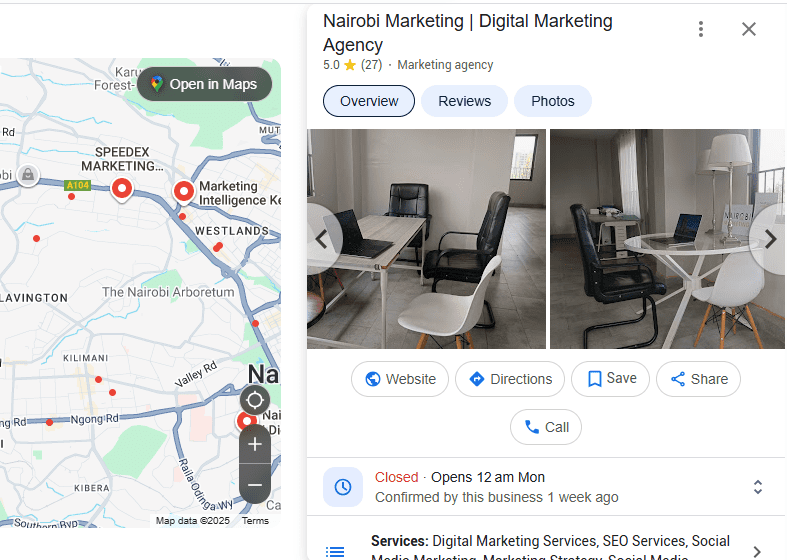
Your Google Business Profile is your digital storefront on Kenya’s busiest street. Complete every section because incomplete profiles lose seventy percent of potential customers who see them as less trustworthy than competitors with full information.
Start with accurate business information including landmark-based directions that Kenyans actually use. “Located opposite Yaya Centre” works better than just a street address because that’s how we give directions in Nairobi. Specify M-Pesa payment acceptance prominently, parking availability especially if you’re in the CBD, and exact service areas for delivery businesses covering multiple neighborhoods.
Choose one primary category that best describes what you do, then add three to five secondary categories to capture different search patterns. A restaurant might use “Restaurant” as primary, then add “Nyama Choma Restaurant,” “Swahili dishes,” and “Family Restaurant” to appear for different queries. Each category opens doors to new search visibility.
Upload high-quality photos of your storefront with visible signage, interior spaces showing your setup, products with KES price tags clearly displayed, team members so customers know who they’ll meet, and payment options signage including M-Pesa codes. Businesses with photos get 42% more direction requests than those without because photos build trust before someone visits.
Post weekly with offers, events, and announcements tied to local happenings. When schools reopen in January, April, or August, businesses serving families should post relevant offers. During December shopping season, highlight special hours or promotions. Use the Q&A section proactively by answering questions before they’re asked: Do you accept M-Pesa? Is parking available? Do you deliver to Kileleshwa? What are your COVID protocols?
The consistency of your name, address, and phone number across Google Business Profile and everywhere else online matters enormously. Google checks these details against other sources like Kenya Directory, Truecaller, and Facebook to verify legitimacy. Inconsistent citations can significantly damage your rankings as Google loses confidence in your business information.
Pillar 2: On-Page SEO and Technical Foundations

Your website needs to work flawlessly on 3G connections, not just 4G networks. The vast majority of searches in Kenya happen on mobile devices, with mobile penetration exceeding 80%, often on slower networks where data costs matter to your customers. Target page load times under three seconds on 3G by compressing images to WebP format, implementing lazy loading so images only load when needed, and minimizing external scripts that slow things down.
Kenya-based hosting through providers like Truehost, Safaricom or implementing Cloudflare’s Kenya servers delivers content faster to local visitors than hosting in Europe or America. The physical distance data travels affects loading speed, and every extra second costs you customers who give up waiting.
Add LocalBusiness schema markup to your homepage and location pages. This structured data tells Google exactly what your business offers, where you’re located, when you’re open, and how much services cost. Include business name, physical address, phone numbers with the +254 country code, opening hours in East Africa Time, price ranges in Kenya shillings, and exact geographic coordinates. This helps Google understand your business and feeds accurate data to AI Overviews that increasingly appear above traditional search results.
Keep your NAP format identical across every page of your website. Put it in your footer e.g. Nairobi Marketing, Renaissance Centre Elgon Road, Nairobi, +254 700 XXXXXX. Use this exact format on your contact page, about page, and anywhere else your details appear. The consistency signals legitimacy to search engines scanning your site.
Create location-specific landing pages with completely unique content for each area you serve, even if you don’t have physical offices there. A page optimized for “web design services Westlands” should mention Sarit Centre, Java House Westlands, accessibility via matatu routes 11B, 23W, 118, 119, and parking details at GTC Tower. These pages rank in organic results below the map pack and drive high-converting traffic from people researching providers before making contact.
Security matters for trust in Kenya’s scam-conscious market. SSL certificates that enable HTTPS are non-negotiable. Display trust badges relevant to Kenyan audiences, mention payment security for those accepting online payments, and include a privacy policy addressing both GDPR and Kenya Data Protection Act requirements.
Pillar 3: Local Content Strategy

Content that ranks locally speaks your city’s language and references landmarks people recognize without needing Google Maps. Create neighborhood pages for every area you serve with landmark-based directions, specific matatu route numbers, parking details, security considerations for evening access, and nearby complementary businesses customers might visit.
Someone searching “SEO services Westlands” should find a page mentioning the business is located near JW Marriott, walking distance from Java House Westlands, accessible via routes 118, 119, 11B, with secure parking near the building, and near other business service providers. This specificity signals local expertise that generic content cannot match.
Local guides build authority and attract backlinks simultaneously. Write comprehensive resources like “Complete Guide to Digital Marketing Costs in Nairobi or “How to Choose Web Design Services in Nairobi: What Local Businesses Should Know.” Include demographic information so readers self-identify with their area and see you understand their specific context.
FAQ content addressing uniquely Kenyan concerns gets featured in AI Overviews appearing above traditional search results. Answer questions about whether you provide services during public holidays, which payment methods you accept beyond M-Pesa, how your service delivery works around Nairobi traffic patterns, whether you serve businesses in Industrial Area, and if generator backup keeps you operational during power outages. Add FAQ schema markup to increase visibility chances.
Blog consistently about local business spotlights in your area, neighborhood business guides comparing different locations, and community events with relevance to your industry. These pieces build backlink opportunities with other local businesses while establishing your authority in the community. When you feature another Westlands business positively in your content, they’re likely to share it and potentially link back from their site.
Balance English and Swahili strategically. Core service pages should be English primary with Swahili terms naturally integrated where appropriate. Blog content can mix based on topic and target audience. Local guides aimed at grassroots audiences benefit from more Swahili integration, while technical business content stays primarily English with key Swahili terms defined for clarity.
Pillar 4: Citation Building and Local Link Acquisition

Citations are mentions of your business name, address, and phone number across the web on directories, review sites, and business listings. Consistent NAP information builds credibility with Google while helping customers find accurate information wherever they look. Inconsistent citations can significantly damage your rankings as Google loses confidence in your business information.
Start with essential Kenyan directories where your business must appear: Google Business Profile is non-negotiable, Kenya Directory provides high local authority, Truecaller is crucial since many Kenyans use it to verify business numbers, PigiaMe Business Directory despite being a marketplace also functions as a citation source, and Facebook Business Pages matter for social verification. These five foundations establish your basic presence.
Industry-specific directories matter next. Kenya Association of Manufacturers for manufacturing businesses, Tourism Regulatory Authority listings for hospitality businesses, Architectural Association of Kenya for construction and design services, Institute of Certified Public Accountants for financial services, and your specific professional association all carry authority in their sectors.
Chamber of Commerce memberships typically cost five to twenty thousand shillings annually but provide high-authority backlinks from Nairobi Chamber of Commerce or Kenya National Chamber of Commerce websites. These links signal established legitimacy to both search engines and potential customers researching your business.
Build local backlinks through partnerships with complementary businesses in your area. A marketing agency partners naturally with web designers, photographers, and copywriters to create “Trusted Partners” pages with reciprocal links. Joint case studies and collaborative blog posts strengthen these partnerships while building citation and link value.
Sponsor local sports teams, school events, community initiatives, and charity organizations for logo placement and links on event websites. A five to ten thousand shilling sponsorship often yields ongoing link presence as events create annual websites reusing sponsor listings year after year.
Media coverage in Standard Digital, Nation Media Group, Business Daily Africa, Capital FM Blog, and Kenya Broadcasting Corporation provides authoritative backlinks when you offer expert commentary on industry trends. Position yourself as the local expert in your field and journalists will contact you when stories need sources.
Track every citation in a spreadsheet noting the platform, URL, date added, and whether NAP matches your standard format exactly. Audit quarterly to catch and fix inconsistencies before they damage rankings. When you change business information like phone numbers or addresses, update every citation immediately to maintain consistency.
Pillar 5: Reputation Management and Reviews

88% of Kenyans trust online reviews as much as personal recommendations, and businesses that respond to reviews are 88% more likely to be chosen over competitors who ignore feedback. Reviews directly influence map pack rankings through quantity signals, quality indicators, and recency factors that Google monitors continuously.
Ask for reviews immediately after positive interactions using direct Google review links sent via SMS or WhatsApp. Generate the link from your Google Business Profile dashboard and create a short URL or QR code making it effortless for customers. Send a personalized message: “Hi [Name], thank you for choosing us for your website project! If you have two minutes, would you share your experience on Google? [link] Your review helps other Nairobi businesses find us when they need web design services.”
Timing matters enormously. Ask right after project completion, after a positive phone call or meeting, immediately after payment while satisfaction is fresh, never during active service delivery which feels pushy and transactional. The moment someone expresses satisfaction is your window to request their review while emotions are positive.
Focus review generation primarily on Google Business Profile where 70% of local searchers look first, then Facebook for social proof since most Kenyans maintain active profiles there, and finally industry-specific platforms relevant to your sector like TripAdvisor for tourism businesses.
Respond to every review within twenty-four to forty-eight hours regardless of rating. For positive reviews, thank customers by name and reference their specific experience to show genuine appreciation not template responses. “Thanks so much, James! We’re thrilled our SEO strategy helped you reduce ad costs by forty percent. The team loved working with you on the Westlands location optimization. Looking forward to supporting your Mombasa expansion next quarter!”
Negative reviews demand even faster response within twenty-four hours maximum. Acknowledge the issue directly, apologize even if you disagree with their characterization, take responsibility for their experience, offer a specific solution, and move the conversation to private channels. “Hi Ms Wanjiru, I’m very sorry to hear about your experience with our service delivery. This doesn’t meet our standards at all. I’d like to understand exactly what happened and make it right. Could you call me directly at 0700XXXXXX or email [email]? We’re committed to resolving this properly. – Mwangi, Director.”
Never argue publicly with negative reviewers, make excuses that sound defensive, blame the customer for misunderstanding, or ignore reviews hoping they’ll disappear. Ignoring reviews signals you don’t care about customer experience and damages your reputation more than the original negative review. Future customers read your responses and judge your business based on how you handle criticism.
Video testimonials build exceptional trust in Kenya’s skeptical market where scams have made people cautious. Film satisfied customers explaining specific results they achieved, how your service solved their particular problem, and why they’d recommend you to other businesses. Faces and voices create authenticity that text reviews cannot match.
Implementation Timeline: Your Ninety-Day Launch Plan
Month one focuses entirely on foundation work requiring twenty to twenty-five hours of concentrated effort. Claim and verify your Google Business Profile ensuring every section is complete, add your NAP to your website footer in consistent format, implement LocalBusiness schema markup with all required fields, run a comprehensive technical audit fixing mobile responsiveness and speed issues, and submit to ten essential Kenyan directories including Kenya Directory and Truecaller. You’ll see your business appearing in Google Maps by week two with basic visibility established.
Month two builds content and expands citations with fifteen to twenty hours of work. Write three to five core service pages with location keywords naturally integrated throughout the content, create two to three neighborhood-specific pages with completely unique content referencing local landmarks, submit to fifteen additional directories including industry-specific platforms, fix any incorrect citations discovered through monitoring, and launch your review generation system with templates ready and direct links created. Expect five to eight quality pages live, twenty-five plus accurate citations across the web, and your first organic reviews appearing from happy customers.
Month three drives expansion and optimization requiring ten to fifteen hours monthly. Publish your first local guide blog post targeting neighborhood-specific keywords, begin weekly Google Business Profile posting with offers and updates, conduct link building outreach to twenty local prospects in complementary businesses, respond to all reviews that come in, and analyze all performance data to identify what’s working. This should deliver your first steady stream of qualified leads from Google search as visibility builds momentum.
Months four through six shift to consistent execution requiring eight to twelve hours monthly. Publish two to four blog posts monthly covering local topics and answering customer questions, create four Google Business Profile posts weekly, request reviews from every satisfied customer through your established system, submit to five to ten new citations monthly expanding your presence, send ten to fifteen link outreach emails to local businesses and organizations, monitor and respond to all reviews within forty-eight hours, and update business information immediately when anything changes. Expect consistent map pack appearances for your target keywords, multiple top-three organic rankings, twenty plus Google reviews with four-star average or higher, and measurable reduction in marketplace ad dependency as Google delivers qualified leads.
Results follow predictable patterns when execution is consistent. Month one is pure investment with minimal immediate return as foundations are built. Month two brings first leads trickling in as visibility increases. Month three delivers two to five qualified leads weekly as momentum builds. Months four through six produce five to ten plus leads weekly with consistent compounding returns as your local SEO assets mature and strengthen.
Budget expectations for businesses outsourcing this work: fifty to one hundred thousand shillings for initial comprehensive setup, fifteen to thirty thousand shillings ongoing monthly management, five to ten thousand per piece for quality content creation, and five to fifteen thousand monthly for essential tools and software. DIY businesses invest primarily time rather than money but should expect the hour commitments outlined above plus tool costs.
Common Mistakes That Sabotage Local SEO

Inconsistent NAP information across your website, Google Business Profile, Kenya Directory, Truecaller, Facebook, and other directories confuses Google and breaks customer trust when they find different phone numbers or addresses. Audit everything systematically and standardize the exact format immediately. One business uses “Westlands, Nairobi” everywhere while another version says “Parklands, Nairobi” – pick one and stick with it absolutely everywhere.
Ignoring mobile optimization when the vast majority of searches happen on phones costs you most potential traffic. Test your website on actual 3G connections not just your office WiFi or 4G. Load your site on a basic Android phone using mobile data and experience what customers experience. If pages take longer than three seconds, you’re losing business to faster competitors.
Keyword stuffing location terms like “Nairobi SEO Nairobi Marketing Nairobi Services Nairobi Business” looks desperately spammy and triggers ranking penalties. Write naturally for humans first with location keywords integrated where they make sense contextually. “SEO services for Nairobi businesses looking to reduce marketplace dependency” reads naturally while still targeting your keywords.
Neglecting review responses especially negative ones signals you don’t care about customer experience and damages reputation more than the bad review itself. Respond to everything within forty-eight hours maximum. Future customers judge you based on how you handle criticism not whether you received it. A professional response to a one-star review can actually build trust.
Building low-quality citations on spammy international directories with no Kenya relevance hurts more than helps. Focus on quality over quantity by targeting directories Kenyans actually use like Kenya Directory and Truecaller rather than obscure international platforms nobody sees. Ten high-quality citations on platforms customers trust beat fifty citations on spam sites that damage credibility.
Copying competitor content for your service descriptions or neighborhood pages triggers duplicate content penalties that tank rankings. Write unique content about your actual business, your specific services, and your genuine local expertise. Google detects duplicate content instantly and penalizes both copies, so stealing descriptions from other Westlands businesses backfires completely.
Two Paths to Local SEO Success
The DIY approach works when you can commit eight to twelve hours monthly after initial setup is complete. You’ll need keyword research tools, citation management systems, and review monitoring software costing five to fifteen thousand shillings monthly combined. The learning curve is steep initially but becomes manageable following the structured implementation guides linked throughout this article. Most small business owners with decent technical skills can execute this strategy successfully with consistent effort over six months.
Done-for-you service makes sense when your time is better spent running your business operations rather than learning SEO technicalities. Professional local SEO management costs KES 40,000 – KES 60,000 for comprehensive setup addressing all five pillars systematically, then KES 20,000 – KES 40,000 monthly for ongoing optimization, content creation, citation building, and review management. You get faster results because experts avoid costly mistakes beginners make, benefit from experience built across dozens of similar Kenyan businesses, and can focus your energy on serving customers rather than figuring out schema markup or citation platforms.
Expected timeline with professional management: initial visibility within four to six weeks as quick wins generate immediate results, consistent lead flow by month three as foundations mature, strong ROI by month six with measurable reduction in marketplace ad dependency, and complete marketplace independence possible by month twelve for businesses in medium-competition niches.

Your Action Plan Starts Now
Begin by auditing your current position honestly. Search for your business name plus your neighborhood and see what appears in results. Check whether your Google Business Profile exists and if so whether it’s complete or abandoned. Test your website on mobile phones using 3G connections. This reality check shows exactly where you stand today and how much work lies ahead.
Choose your implementation path based on realistic assessment of available time, technical skills, and business priorities. DIY makes sense for businesses with someone internal who can dedicate the required hours consistently and enjoys learning technical processes. Done-for-you fits businesses where owner time is better spent on revenue-generating activities or where technical skills are limited.
Your competitors are executing this exact strategy right now while you read this. The businesses claiming top map pack positions today will be exponentially harder to displace six months from now when they have twenty reviews, fifty citations, and dozens of optimized content pieces. Every day you delay is another day they’re building compounding advantages.
Start with the free local SEO audit showing exactly where you rank today, what’s currently working, and specific improvements that will drive qualified leads to your business. This thirty-minute assessment identifies quick wins you can implement immediately while mapping the complete six-month strategy for local search dominance in your neighborhood. The businesses that move decisively now will own local search visibility in their markets. Everyone else will watch customers find competitors first.