A traveller in London opens Google and types “best safari company Tanzania.” She has never heard of Roy Safaris. She has never seen their website. But their name comes up near the top of the results. She clicks, reads, and books a seven-day Serengeti trip worth $4,200.
No paid ads. No cold calls. No WhatsApp broadcast. Just Google connecting someone who had a question with a business that had the answer.
That is SEO working. And it is available to every business in Kenya, Tanzania, Uganda and across East Africa right now.

What is SEO?
SEO stands for Search Engine Optimization. It is the work you do to make your website show up on Google when someone searches for what you sell or offer.
When a person in Nairobi types “immigration lawyer Westlands” into Google, they get a list of results. The businesses near the top did not pay Google to appear there. They earned those positions by making their websites relevant, trustworthy, and easy for Google to understand. That whole process is SEO.
It works the same way whether you run a law firm in Westlands, a hotel in Zanzibar, a tour company in Arusha, or a clinic in Kisumu. If people are searching for what you offer, SEO is how they find you.

Why Does SEO Matter for Businesses in Kenya?
Kenya is one of the fastest-growing internet markets in Africa. The opportunity for businesses that invest in SEO right now is significant. Here is why.
More Than 27 Million Kenyans Are Searching Online
Kenya has 27.4 million internet users. That is 48% of the population, according to DataReportal’s Digital 2025 Kenya report. There are 68.8 million mobile connections in a country of 57 million people, which means most Kenyans run more than one SIM card. Almost all of that internet activity starts with a search engine. Google controls over 96% of all searches in Kenya.
That means when someone in Nairobi wants a plumber, a school, a hospital, or a hotel, they go to Google first. If your business is not showing up in those results, that customer goes to a competitor who is.
SEO Keeps Bringing Customers After You Stop Working
Think of Google Ads like renting a market stall. The moment you stop paying rent, you pack up and go home. Nobody finds you anymore. SEO is different. It is more like owning a shop on a busy street. Once you have done the work to get there, people keep walking in every single day without you paying anything extra.
A hardware shop in Industrial Area, Nairobi that ranks on page one for “building materials Nairobi” gets clicks and calls every week, month after month, without spending a shilling on advertising. That is the compounding power of SEO.
Most of Your Competitors Are Getting It Wrong
Here is the reality in Kenya right now. Most businesses either have no SEO strategy at all, or they did something basic a few years ago and forgot about it. Their websites have thin content, no keyword strategy, poor mobile performance, and no Google Business Profile set up.
That is your opportunity. Businesses that do SEO properly today, while competitors are not paying attention, will be very hard to dislodge twelve months from now. The window to build a strong SEO position before your market gets crowded will not stay open forever.
How Does Google Decide Who Shows Up First?
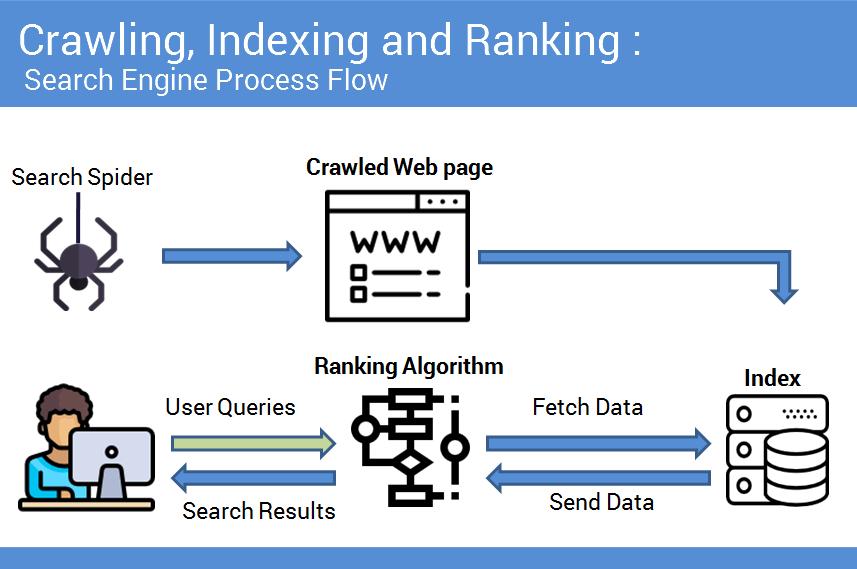
Google is like a librarian managing a library with over a trillion books. When you type something into the search bar, the librarian does not read every book from scratch. She has already read them all, filed them away, and knows exactly which ones best answer your question. Here is how that filing system works.
Step 1: Google Crawls Your Website
Google uses automated programs called crawlers, sometimes called Googlebot, to move around the internet reading websites. Think of them like scouts that walk through every page of your site, following links from one page to the next. They read your content, look at your images, and take note of what your website is about.
If your website has technical problems, like broken links, pages that load very slowly, or settings that accidentally block Google from entering, those scouts cannot do their job properly. That is why technical SEO matters.
Step 2: Google Indexes Your Pages
After crawling your site, Google stores the information in a massive database called the index. This is the library filing system. Your pages get categorised by topic, quality, and relevance so that when someone searches for something you cover, Google can retrieve your page quickly.
You can check if Google has indexed your website by going to Google and typing site:yourdomainname.com in the search bar. If your pages appear in the results, Google knows you exist. If nothing comes up, you have a problem worth fixing immediately.
Step 3: Google Ranks the Best Results
When someone searches for “safari company Uganda,” Google goes into its index and pulls out every page that is relevant to that query. Then it ranks them in order, with the best results at the top. The factors Google uses include the quality and depth of your content, how relevant your page is to what the person searched, how trustworthy your website appears, how fast your site loads, and whether it works properly on a mobile phone.
SEO is the process of improving all of these things so that Google ranks your pages above your competitors.
The 4 Types of SEO Every Kenyan Business Needs to Know
SEO is not one single thing. It is four disciplines working together. Understanding all four is what separates businesses that rank consistently from those that try SEO for three months and give up.
On-Page SEO: What You Put on Each Page
On-page SEO is everything you do on your own website to help Google understand what each page is about. It includes the keywords you use in your content, the headings you write, the titles and descriptions that appear in Google results, and how you structure your articles and service pages.
A restaurant on Ngong Road in Nairobi that wants to rank for “best Indian restaurant Nairobi” needs to use that phrase naturally in their page content, their page title, and their headings. They also need well-written content that genuinely describes the food, the experience, and the location. Google can tell the difference between a page written to serve the reader and a page stuffed with keywords to game the algorithm.
Off-Page SEO: What Other Websites Say About You
Off-page SEO covers everything that happens outside your own website but still affects how Google sees you. The most important signal is backlinks, which are links from other websites pointing to yours. Every quality backlink is a vote of confidence. It tells Google that another site trusts you enough to send their readers to you.
A Nairobi law firm that gets mentioned in an article on Business Daily Africa or Nation Media earns a powerful backlink from a trusted Kenyan publication. That single mention can do more for their rankings than months of on-page work alone. Other off-page signals include brand mentions, reviews on Google and TripAdvisor, and your presence on social media platforms.
Technical SEO: Making Sure Google Can Actually Find You
Technical SEO is the foundation everything else sits on. It covers your site speed, how your website is structured, whether it works properly on mobile phones, and whether Google can crawl and index your pages without problems.
A tour company in Arusha once had a website that looked perfectly fine to anyone opening it in Tanzania. But when accessed from outside the country through a VPN, the site was completely unreachable. International visitors could not see it. More importantly, Google’s crawlers, which operate from servers in the United States, could not access it either. The site was invisible to search engines and nobody knew why. Technical SEO audits catch problems like this before they cost you months of lost traffic and bookings.
Local SEO: Getting Found in Your City or Neighbourhood
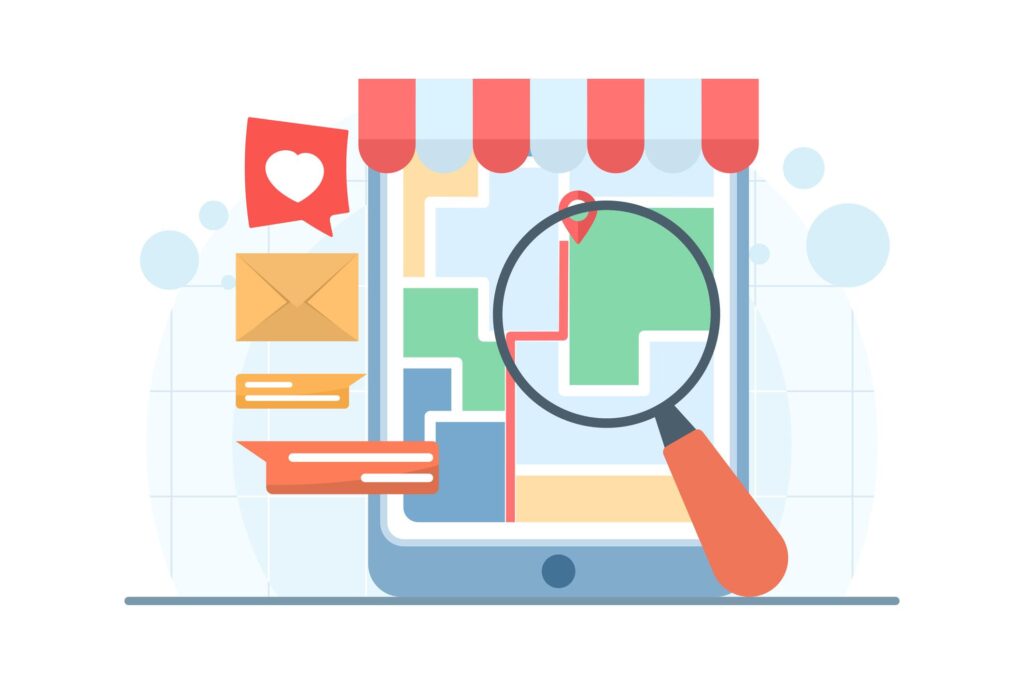
Local SEO helps your business appear when someone nearby searches for what you offer. When someone in Kilimani searches “dentist near me” on their phone, Google shows a map with three businesses at the top. Those are the Local Pack results, and getting into that map is the goal of local SEO.
Local SEO involves claiming and completing your Google Business Profile, getting listed in Kenyan business directories, keeping your contact details consistent across the internet, and collecting genuine customer reviews. For any business serving customers in a specific location, whether that is a salon in Westlands, a hardware store in Mombasa, or a hotel in Nakuru, local SEO is the highest-return SEO investment you can make.
Keyword Research: Finding What Kenyans Actually Type Into Google
Before you write a single word of content, you need to understand what your potential customers are searching for. This is keyword research, and it is where most Kenyan businesses get their SEO strategy wrong from the very beginning.

Think Like Your Customer, Not Like an Expert
Business owners tend to use industry language when they describe their own services. A lawyer thinks of themselves as offering “legal counsel and litigation services.” But their potential client is typing “lawyer who handles divorce in Nairobi” or “how to fight unfair dismissal in Kenya.” Those are very different phrases, and the business that understands the customer’s language wins.
The simplest keyword research method is to ask yourself what question your customer has before they need you, then go to Google and start typing that question. Look at what Google suggests in the dropdown. Look at the “People also ask” section in the results. Those are real searches that real Kenyans are typing every day.
English and Swahili: Both Matter for SEO in Kenya
This is something almost no Kenyan SEO article covers, but it matters a great deal. Kenyans search in both English and Swahili, and sometimes in a mix of both. “Mkopo wa haraka” and “quick loan Kenya” bring up different results because they are genuinely different searches. “Daktari Nairobi” and “doctor Nairobi” attract different users.
If your business serves Kenyans, especially in sectors like financial services, healthcare, food, or transport, ignoring Swahili search terms means leaving a significant portion of your potential traffic behind. The right approach is to cover both languages in your content strategy. Not to translate the same content word for word, but to create content that genuinely serves each audience in the language they search in.
Small Search Numbers Can Mean Big Business in Kenya
Kenyan search volumes look tiny compared to global benchmarks. A keyword that gets 50 monthly searches in Kenya might look worthless to someone used to targeting keywords with 50,000 monthly searches in the United States. But context changes everything.
Fifty searches per month for “gorilla trekking Uganda budget tour” means fifty people who are actively researching and ready to book. If your company is the one they find and trust, that is potentially fifty high-value inquiries from a single keyword. In a market with lower overall search volumes, high-intent low-volume keywords are where the real money is.
SEO Content: Why What You Write Determines Whether You Rank
Google’s entire purpose is to give people the best possible answer to their question. That means businesses that write the most helpful, accurate, and complete content about a topic tend to rank above those that publish thin, generic pages.
Write for the Person First, Check for Google Second
The best SEO content reads like a knowledgeable friend explaining something clearly. Short sentences. Real answers given early rather than buried after three paragraphs of background. Examples the reader recognises from their own life.
Write for a smart twelve-year-old who has never heard of your industry. If they can understand it, your content is clear enough. Then go back and check that your primary keyword appears naturally in the title, the first paragraph, and two or three subheadings. That is all the keyword work most pages need.
What Good SEO Content Looks Like for a Kenyan Business
Good SEO content in the Kenyan context is specific. It mentions real places like Karen, Kilimani, the CBD, Westlands, Mombasa’s Old Town, or Arusha’s city centre rather than vague references to “Kenya.” It references real platforms Kenyans use daily, like M-Pesa for payments, Safaricom for connectivity, or eCitizen for government services. It answers questions in the way Kenyans actually ask them.
It is also longer than what your competitors have published. If every other article on your topic is 600 words, a well-structured 2,000-word article that covers the topic more completely will almost always outrank it. Depth signals authority. Thin content signals the opposite.
Local SEO: How to Get Found in Nairobi, Mombasa, Kisumu and Beyond
Local SEO deserves its own section because for most Kenyan businesses, it is the fastest path to results. You do not need to compete with international websites. You just need to be the most visible option in your city for what you offer.
Set Up and Optimise Your Google Business Profile
Your Google Business Profile is the listing that appears on Google Maps and in the panel on the right side of Google results when someone searches for your business. It is completely free and it is one of the most powerful local SEO tools available in Kenya.
Fill in every section completely. Business name, address, phone number, website, opening hours, business category, and a description of what you do. Add photographs of your premises, your team, and your products or services. Post regular updates the same way you would on social media. A complete, active Google Business Profile significantly increases your chances of appearing in the Local Pack results for searches in your area.
Get Listed in Kenyan Business Directories
Citations are mentions of your business name, address, and phone number on other websites. Consistency matters. If your phone number is listed differently on five different directories, Google gets confused about which version is correct and your local rankings suffer.
List your business on directories like Yellow Pages Kenya, Business List Kenya, and Mocality. Tourism businesses should appear on SafariBookings and TripAdvisor. Legal firms should be listed with the Law Society of Kenya or Laws Firms in Kenya directory. Clinics should appear in medical directories (if they exist..a general directory if they don’t) covering Nairobi and other Kenyan cities. The more consistent your details are across the internet, the more Google trusts them.
Reviews Are a Direct Ranking Signal
Google uses the number and quality of your reviews as a local ranking factor. A business with forty genuine four-star reviews on Google will almost always rank above a competitor with five reviews, even if that competitor has a better-looking website.
Ask every satisfied customer to leave a review. Make it easy by sending them a direct link to your Google review page. Respond to every review, positive and negative. A thoughtful response to a negative review often impresses potential customers more than a page full of five-star ratings. It shows you are attentive, professional, and you actually care about your service.
Common SEO Mistakes Kenyan Businesses Make
Understanding what to do is only half the picture. These are the mistakes that consistently hold Kenyan businesses back from ranking well:
- Building a website on desktop without testing it on mobile is the most common and damaging mistake. Around 70% of web traffic in Kenya comes from mobile devices, according to StatCounter data. A site that looks great on a laptop but breaks on a Tecno or Samsung phone is losing the majority of its potential visitors before they even read a word.
- Publishing very short pages with little content is another widespread problem. A service page with one paragraph and a phone number is not going to rank. Google needs enough content to understand what the page is about and to assess whether it genuinely helps the reader.
- Ignoring Google Search Console costs businesses valuable insight. This free tool from Google shows you exactly which keywords your site is appearing for, which pages are getting clicks, and whether there are any technical errors Google has flagged on your site. Not using it is like running a shop without knowing which products people are asking for.
- Paying for cheap backlinks from unknown websites catches many Kenyan businesses. These link packages sold for a few thousand shillings almost always come from low-quality or spammy sites that damage your rankings rather than improve them. Building backlinks the right way takes longer but the results actually last.
- Leaving your Google Business Profile incomplete or unclaimed is a local SEO error that is immediately fixable. Many Kenyan businesses are listed on Google Maps with incomplete information or with details they have never verified. Claiming and completing that listing takes one afternoon and can produce results within weeks.

SEO vs Google Ads: Which One Is Right for Your Business?
This is one of the most common questions Kenyan business owners ask, and the honest answer is that they solve different problems.
Google Ads puts your business at the top of search results immediately. You pay each time someone clicks your ad. The moment your budget runs out, you disappear. SEO takes longer to show results, typically three to six months before meaningful traffic arrives, but once you rank, you are not paying per click. The traffic compounds over time.
For a new business that needs leads right now, Google Ads makes sense as a short-term strategy while SEO is being built. For an established business with a six to twelve month view, SEO delivers a better return on investment. For most Kenyan businesses, the smartest approach is to run both together. Google Ads covers immediate commercial keywords while SEO builds long-term authority across a broader range of topics.
How Long Does SEO Take in Kenya?
This is the question every business owner asks, and it deserves an honest answer rather than a vague “it depends.”
In months one and two, you are laying the foundation. Keyword research, technical fixes, Google Business Profile setup, and the first pieces of content. You will not see much movement in rankings yet, but this work is essential.
In months three and four, the first signs appear. Long-tail keywords, which are the more specific, lower-competition search phrases, start showing up on pages two and three of Google results. Traffic begins to tick upward slightly.
In months five and six, meaningful progress is visible. Some of your target keywords reach page one. Traffic from organic search becomes a consistent part of your overall leads.
From month seven onwards, the compounding effect begins. Rankings stabilise, traffic grows, and leads keep coming without additional spend. This is when SEO starts to feel like a real asset rather than an experiment.
New .co.ke domains typically take longer than established sites to gain traction. Competitive niches like Nairobi real estate, legal services, and financial products take longer than less contested markets like tour operators in specific regions or specialist service businesses in smaller Kenyan cities.

What About AI Search? ChatGPT, Gemini and Perplexity Are Changing How People Find Businesses
Something important is happening that most Kenyan businesses have not noticed yet. A growing number of people are no longer typing their questions into Google. They are asking AI assistants instead.
A business traveller in Johannesburg asks ChatGPT to recommend a business hotel in Nairobi for a four-night stay. A student in London asks Gemini which tour companies in Uganda offer gorilla trekking. A property investor in Dubai asks Perplexity which law firms in Nairobi handle commercial real estate transactions.
These AI systems generate answers by reading and synthesising content from across the internet. The businesses that get recommended are not paying for placement. They are there because their websites have the right content structure, the right entity signals, and enough depth of information that AI systems recognise them as authoritative.
Good SEO and good AI search visibility are built on the same foundation. If you do SEO properly, you are already building the conditions needed to appear in AI-generated answers. The additional steps needed to fully optimise for AI search, known as Generative Engine Optimization or GEO, are the natural next evolution of everything you are reading in this guide.
Frequently Asked Questions About SEO in Kenya
What does SEO stand for? SEO stands for Search Engine Optimization. It is the practice of improving your website so that it appears higher in Google search results when people search for products or services related to your business.
How much does SEO cost in Kenya? SEO costs in Kenya vary widely depending on the scope of work and who you hire. Basic monthly retainers for small businesses start from around Ksh 40,000 per month. Comprehensive campaigns for competitive industries typically range from Ksh 70,000 to Ksh 200,000 per month. Be cautious of very cheap packages that promise fast results, as these often use tactics that can get your site penalised.
Can I do SEO myself without hiring an agency? Yes, you can handle the basics yourself. Setting up your Google Business Profile, writing good content for your website, and getting listed in local directories are all things any business owner can do. The more technical elements, such as fixing crawl errors, building backlinks, and conducting a full site audit, are usually better handled by someone with experience. But the fundamentals are accessible to anyone willing to put in the time.
How is SEO different from social media marketing? Social media marketing builds visibility on platforms like Facebook, Instagram, TikTok, and LinkedIn. SEO builds visibility on Google, Bing, Yandex and other search engines. The key difference is intent. People on social media are scrolling for entertainment. People on Google are actively searching for something specific. SEO connects you with people who are already looking for what you offer, which is why it tends to produce higher conversion rates.
What is the difference between SEO and SEM? SEM stands for Search Engine Marketing and is a broader term that covers both SEO and paid search advertising like Google Ads. SEO refers specifically to the organic, unpaid work of improving your rankings. SEM refers to the overall strategy of appearing in search results, whether through organic rankings, paid ads, or both.
Does SEO work for small businesses in Kenya? SEO is particularly powerful for small businesses in Kenya because competition in most local markets is still relatively low. A well-optimised small business in Kisumu or Nakuru can outrank much larger competitors simply by having better content, a complete Google Business Profile, and consistent local citations. The size of your business matters far less than the quality of your SEO strategy.
How do I know if my SEO is working? The clearest indicators are growth in organic traffic, improvement in keyword rankings, and an increase in leads or enquiries from people who found you through Google. Google Search Console is a free tool that shows you exactly which keywords your site is appearing for and how many people are clicking through. Google Analytics shows you how much of your total website traffic is coming from organic search.
Is SEO still worth it now that AI search exists? Yes. Google still processes over 14 billion searches every day globally, and in Kenya it accounts for over 96% of all search activity. AI assistants are growing in usage but they have not replaced traditional search. The content that ranks well on Google is largely the same content that gets cited by AI systems. Investing in SEO today builds visibility across both traditional search and AI-driven discovery at the same time.
SEO is one of the most valuable long-term investments a Kenyan business can make. The businesses appearing at the top of Google results for their most important keywords did not get there by accident. They made a decision to invest in their online visibility and they stuck with it. If you want to understand what that process looks like for your specific business, our SEO services page covers how we approach it for businesses in Kenya and across East Africa.