Every digital marketing framework you will find online was written for someone else. The HubSpot guides were written for American B2B software companies. The Neil Patel playbooks were built for English-language e-commerce brands selling to credit card users. The Meta ads tutorials assume your customer will fill in a payment form and wait for a confirmation email.
None of them were written for a market where the most powerful sales tool is a chat app, the dominant payment method was invented by a phone company, and your customer decides whether to trust you based on whether someone in their network vouches for you first.
That is Kenya. And if you are running digital marketing campaigns here using a framework designed for London or Los Angeles, you are already working against yourself.
Kenya Skipped a Generation of Digital Infrastructure and That Changes Everything
Kenya never had a credit card culture. There was no established online banking system to disrupt, no generation of consumers trained to enter sixteen digits into a checkout form and wait three days for delivery confirmation. When M-Pesa arrived in 2007, it did not compete with anything. It filled a genuine gap in a market that needed it badly.
The result is a country that went from cash to mobile money without the intermediate steps that shaped digital commerce everywhere else. While Western markets spent twenty years training consumers to buy online with cards, Kenya built an entirely different infrastructure and trained its consumers on that instead.
This changes the entire purchase journey. It changes what digital marketing has to do to work. And it is the single biggest reason why importing a foreign playbook into Kenya produces mediocre results at best and wasted budgets at worst.
WhatsApp Is Not a Messaging App in Kenya. It Is a Sales Floor
I have worked with businesses across Kenya, Tanzania, and Uganda for over a decade. The most consistent pattern I have observed is this. Discovery happens on Instagram or Google. Research happens on the website. But the actual decision to buy happens on WhatsApp.
The Kenyan buying journey on WhatsApp looks like this. A potential customer sees your product on Instagram. They click the link in your bio. They read the page. Then they send you a WhatsApp message that says something like “Hi, is this available?” What follows is a conversation. They ask about the price. You tell them. They think about it. You follow up. They ask a question about delivery. You answer. Eventually they say “okay send me the payment details.” You send an M-Pesa number or a payment link. They pay. Done.
That entire journey, from first contact to completed sale, happened in a chat thread.
We tested this directly when running lead generation for Nairobi Marketing. We ran the same campaign with two conversion options side by side. One was a standard lead capture form. The other was a WhatsApp button. The volume of leads was comparable. The quality of conversations was not even close.
The form leads came in and sat. By the time someone followed up, the prospect had moved on, opened three other browser tabs, and their purchase intent had cooled. The WhatsApp leads opened a conversation immediately while the prospect was still warm, still engaged, and still actively thinking about the problem they were trying to solve.
This is not just a Kenyan observation. The science backs it up. Research from Harvard Business Review and multiple sales studies shows that responding to a lead within five minutes makes you 100 times more likely to convert them than if you wait thirty minutes. The odds of qualifying a lead drop by 400% when response time goes from five to ten minutes. 78% of customers end up buying from the first company that responds. Not the best company. The first.
WhatsApp wins in Kenya because it collapses the gap between intent and conversation. A form submission creates a gap. WhatsApp eliminates it. The prospect presses send and a conversation starts within seconds if you have it set up properly. That speed, that immediacy, is doing a significant portion of the conversion work before you have even typed a single word back.
A digital marketing strategy that does not have a WhatsApp conversion layer built into it is structurally incomplete in Kenya. It does not matter how good the Instagram content is or how high the website ranks. If there is no easy way to start a WhatsApp conversation, you are losing customers at the most important step.
TikTok Has Changed What Is Possible for Kenyan Businesses
Instagram is a follower economy. You build an audience, and that audience sees your content. If you are starting from zero, growth is slow and the algorithm favours accounts that are already big. TikTok works entirely differently. Its algorithm distributes content based on relevance and engagement, not on how many followers you already have. A Kenyan business with zero followers can post a video today and have it seen by fifty thousand people by tomorrow morning if the content resonates.
This is not a small distinction. It completely changes what digital marketing can do for a business that is starting from scratch or operating without a large advertising budget.
The clearest example in Kenya right now is Shiquo wa Hii Style.
Shiquo built her business almost entirely through TikTok. She started posting short, direct videos showing products. Shoes. Clothes. Electronics. Household items. No production budget. No agency. No elaborate strategy. Just consistent, honest content showing what she had and what it cost. The prices were low. The communication was straightforward. Kenyan viewers responded.
People started sharing her videos. Followers became customers. Customers became advocates who filmed their own visits, unboxing videos, and reviews and posted them on their own accounts, which brought more customers. At the time of writing she has multiple physical locations in Nairobi’s CBD. RNG Plaza on Ronald Ngala Street for shoes, suitcases, tablets, and smartwatches. Superior Centre near HH Towers for TVs, home theatres, microwaves, and kitchen appliances. Beaver House on Tom Mboya Street for bedding, kitchenware, and home goods. A Lifestyle Store on Moktar Daddah Street for clothing and bags. She now has a Mombasa location as well, driven by demand from Coast-based followers who had been asking for a physical presence there for months.
Kenyans have been photographed queuing for hours outside her locations. One TikTok video documenting the queues at her shops received over 52,000 likes and hundreds of comments. The comments are the most revealing thing. They are not just people complimenting the products. They are people tagging their friends, sharing the location, asking for delivery options, and discussing what they bought. That is a community, not a customer list.
None of this happened because of a sophisticated marketing strategy. It happened because TikTok gave a business that understood its audience a direct line to that audience without requiring an established following or a significant budget to reach them.
What makes the Shiquo story particularly instructive for digital marketing in Kenya is the channel stack she used. TikTok built awareness and trust at massive scale. WhatsApp and walk-in traffic converted that awareness into sales. M-Pesa handled the transactions. Three tools working together, all built for the Kenyan market, all free or near-free to operate.
This is the TikTok opportunity that most established Kenyan businesses have not yet properly understood. They see TikTok as a platform for entertainment content aimed at teenagers. What Shiquo demonstrated is that it is a commerce platform that rewards authenticity and consistency over production quality and advertising budgets. Any business in Kenya with a product, a phone, and a willingness to show up on camera consistently can access the same algorithm that turned a TikTok page into a multi-location retail operation.
The catch is that TikTok rewards genuine content mercilessly. Polished corporate videos perform poorly. Staged content performs poorly. Content that clearly has an agenda performs poorly. What works is the kind of honest, unscripted, specific content that feels like someone showing you something real. That is harder for large brands with multiple layers of approval to produce than it is for an individual entrepreneur with no committee to answer to. Which is exactly why individual entrepreneurs like Shiquo have been able to build so quickly while established retailers watch from the sidelines trying to figure out what is happening.
Kenyans Do Not Buy From Brands. They Buy From People They Trust
Research consistently confirms what anyone who has spent time doing business in Kenya already knows. Peer recommendations carry more weight here than advertising. Word of mouth travels fast through tight community networks. A single endorsement from the right person reaches further than a campaign with a significant budget behind it.
93% of marketers globally who use user-generated content say it outperforms traditional branded content. 79% of consumers feel more comfortable with a brand that shows real customers rather than polished creative. These are global figures. In Kenya, where community trust is a primary decision-making signal, the gap is likely even wider.
The practical examples are everywhere if you pay attention. A Nairobi restaurant that reposts a customer’s Instagram story of their meal will get more enquiries from that single repost than from a week of professionally produced content. A fashion brand that shares unboxing videos from real customers performs better than one that invests everything in studio photography. A safari company that features a genuine testimonial video from a real traveller who just returned from the Mara reaches a prospective client’s emotional decision-making centre in a way that no amount of glossy brochure copy can match.
Shiquo’s growth illustrates this perfectly. A significant portion of her visibility did not come from her own content. It came from customers who filmed themselves visiting her shops, reviewing what they bought, and comparing prices with what they had paid elsewhere. That unsolicited content, from real people with no commercial relationship to the brand, generated credibility that no paid campaign could have manufactured.
The businesses winning in Kenya right now are not the ones with the biggest ad budgets. They are the ones that have built enough genuine trust in their community that the community does their marketing for them.
The Language Nobody Puts in Their Content Strategy
English and Swahili are both official languages in Kenya and both appear in search queries, social media, and business communication. Most digital marketing strategies acknowledge this to some degree.
What very few acknowledge is Sheng.
Sheng is the street language of Nairobi, a fluid mix of Swahili, English, Kikuyu, Luo, and other languages that evolves constantly and is the primary vernacular of a significant portion of the urban population under 35. It is the language of TikTok comments, Instagram stories, WhatsApp groups, and the conversations that actually happen between Kenyan young adults online.
And Safaricom understood this long before most brands did. Their loyalty programme is called Bonga Points. Not Loyalty Points. Not Reward Points. Bonga, which means chat or talk in Swahili and Sheng. The programme lets Safaricom subscribers earn one point for every Ksh 10 spent on voice calls, data, or M-Pesa transactions, then redeem those points for airtime, data bundles, shopping at Naivas and Chandarana, or even Kenya Airways flights. Through the Lipa na Bonga feature, subscribers can use their accumulated points to pay directly at any M-Pesa Lipa na Biashara till across Kenya. It is considered Safaricom’s second most important product after M-Pesa, and they named it after the act of talking. That is not accidental. That is a brand that understood its audience’s language before most agencies had even thought about it.
A fashion brand in Nairobi writing captions in formal corporate English to reach 22-year-olds in Githurai or Kasarani is speaking the wrong language in the wrong register. The brands breaking through on TikTok in Kenya sound like actual Kenyans having actual conversations, not like a translated global campaign that was reviewed by a compliance team.
The risk on the other side is brands that try too hard. Sheng evolves faster than most content calendars. A brand that picks up a phrase from 2022 and deploys it in 2026 does not come across as relatable. It comes across as your uncle trying to use slang he learned from his teenage son. The brands that get this right are the ones with genuine connections inside the communities they are targeting, usually through staff, collaborators, or creators who are actually from those communities rather than people guessing from the outside.
This does not mean every business needs to write in Sheng. A law firm in Westlands targeting corporate clients in Upper Hill does not. But understanding the language your specific audience actually speaks and writing content in that register rather than defaulting to formal English is the difference between content that resonates and content that gets scrolled past.
Price is Always Part of the Conversation
Price sensitivity in Kenya cuts across all income levels. The executive in Runda comparison shops. The business owner in Westlands negotiates. The customer in Eastlands expects to be able to ask questions before committing.
The culture of negotiation that exists in Nairobi’s physical markets does not disappear when commerce moves online. It migrates to WhatsApp. A customer who would have bargained at a stall in Gikomba now sends a DM asking if you can do a better price.
Digital marketing strategies that ignore this by driving all traffic to fixed-price pages with no direct contact option lose customers at the conversion point. The most effective Kenyan brands build flexibility into their funnel. They make it easy to ask questions. They are transparent about pricing. They do not treat a price enquiry as suspicious behaviour. They treat it as a customer who is close to buying and needs one more conversation to get there.
Part of why Shiquo built such a loyal following quickly is that her pricing was always explicit in her content. Sneakers at Ksh 800. Phones from Ksh 1,900. Prices shown on screen, no ambiguity, no “DM for price.” In a market where many sellers hide pricing to create negotiation opportunities, the transparency was itself a differentiator. People shared her content partly because the prices were something worth sharing.
The Calendar Nobody Outside Kenya Markets Around
January in Kenya is one of the highest consumer spending periods of the year. Not because of New Year enthusiasm but because school fees are due in January and August, and parents across the country are making large planned purchases simultaneously. A back-to-school campaign timed to those windows reaches Kenyan parents at the exact moment they are already in spending mode.
Madaraka Day. Jamhuri Day. Mashujaa Day. Ramadan for the significant Muslim communities in Mombasa, Nairobi’s Eastleigh, and the Coast. The agricultural calendar that drives spending patterns in rural counties. These are the moments that matter to Kenyan audiences and none of them appear in a Western digital marketing calendar.
Campaigns built around these dates consistently outperform generic always-on content in Kenya because they signal something important. They tell the audience that the brand understands the life being lived on the other side of the screen. That signal builds trust faster than any amount of polished creative.
Mobile First is Not a Design Principle in Kenya. It Is the Only Principle
Over 70% of internet traffic in Kenya comes from mobile devices. But the number alone does not capture what matters most.
The phones being used are mid-range Android devices. Tecno, Itel, Samsung A-series. Running on Safaricom, Airtel, or Telkom data connections that vary in strength depending on location and time of day. Users who are data-conscious because they are buying bundles rather than paying for unlimited broadband.
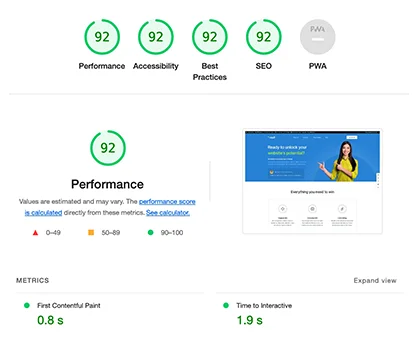
A website that takes eight seconds to load on one of those devices is not a slow website in Kenya. It is a website that a significant portion of your potential customers will never actually see because they moved on after three seconds.
Every landing page, every ad creative, every email, every WhatsApp message, every piece of content has to be designed for a 6-inch screen on a variable connection. Not optimised for mobile as an afterthought. Designed for mobile from the beginning, with the desktop experience as the secondary consideration.
Why Importing a Foreign Digital Marketing Playbook Usually Fails in Kenya
The businesses in Kenya that struggle most with digital marketing are almost always using a framework designed for a different market. This is not a criticism. It is a structural problem. Most of the freely available digital marketing education online reflects the markets where that content was produced. American. British. Australian. None of those markets have M-Pesa. None of them have WhatsApp as the primary business communication tool. None of them have TikTok driving physical retail footfall the way Shiquo demonstrated it can. None of them have the trust dynamics, the language mix, or the cultural calendar of Kenya.
An agency that learned its craft running campaigns for UK e-commerce brands is not automatically equipped to run campaigns for a Nairobi restaurant, a Mombasa tour company, or a Kisumu healthcare provider. The channels overlap but everything else is different.
Effective digital marketing in Kenya requires understanding Kenya first and digital marketing second. The technical skills are transferable. The market knowledge is not.
What This Means Practically
Every campaign needs a WhatsApp layer. M-Pesa needs to be at checkout without three steps to get there. TikTok deserves serious attention even if your business is not targeting a young demographic, because the algorithm does not discriminate by age. Content needs to sound like a real Kenyan, not a translated global brand. Mobile performance is not optional. Community trust signals matter more than polished advertising. The local cultural calendar should be in your content plan. Pricing transparency reduces friction at the conversion point. And responding to a lead within five minutes is not a nice-to-have. The data shows it is the single biggest conversion lever available to any business, in Kenya or anywhere else.
None of these are revolutionary tactics. They are the structural requirements of digital marketing that actually works in Kenya in 2026. The businesses that get them right are the ones that treat Kenya as its own distinct market rather than a smaller version of somewhere else.