For the past decade, every SEO professional has obsessed over Domain Rating. Chase high-authority backlinks. Build DR 70+ before targeting competitive keywords. The conventional wisdom has been clear: without massive domain authority, you can’t compete.
But something fundamental changed in 2025-2026.
Analysis of AI citations across ChatGPT, Perplexity, and Gemini reveals a pattern that contradicts everything traditional SEO taught us. Sites with Domain Rating 10-40 are appearing just as frequently as sites with DR 70-95. In some cases, they’re outranking industry giants.
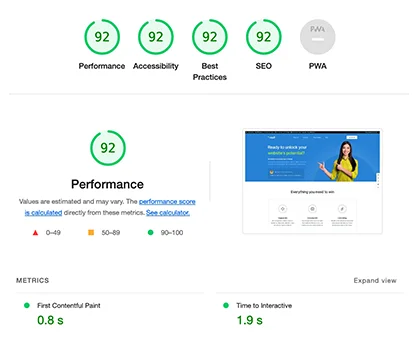
A global security network site with DR 40 appeared in top citation positions for competitive queries, ranking alongside brands with DR 80+. A link building tool launched in late 2025 hit DR 55 within 30 days and immediately started appearing in AI responses across multiple platforms.
The rules have changed. Here’s what’s actually driving AI search visibility in 2026.
The Domain Rating Paradox
Traditional Google SEO operates on a clear hierarchy. For competitive commercial keywords, you need DR 70 minimum. Often DR 80+. The algorithm heavily weights domain authority when determining rankings, especially for “Your Money Your Life” topics.
AI search doesn’t follow these rules.
When language models generate responses, they evaluate sources using completely different criteria than Google’s PageRank-derived algorithm. The result is a paradox that’s catching most SEOs off guard: sites with modest domain authority are getting cited as frequently as established authorities.
What the data shows:
Analysis of AI citation sources reveals a surprising pattern. Sites with DR 10-40 appear nearly as frequently as sites with DR 70+ in language model responses. The distribution is nearly flat across domain rating ranges, meaning a site with DR 25 has roughly the same chance of being cited as a site with DR 75, assuming both have relevant, well-structured content.
One striking example: websites with domain ratings between 0-20 were being used as citation sources across multiple competitive queries. These are sites that would struggle to rank on page one of Google for any meaningful keyword, yet they’re appearing in AI responses alongside industry authorities.
This isn’t what anyone expected.
Why Language Models Evaluate Sources Differently
Google’s algorithm prioritizes authority signals because it’s trying to prevent manipulation at massive scale. With billions of pages to rank, domain authority serves as a reliable proxy for quality and trustworthiness.
Language models work differently. They’re not ranking pages for SERP positions. They’re selecting sources to cite in generated responses. The evaluation process prioritizes:
Content Relevance and Freshness
LLMs heavily favor recent content. A DR 30 site that published an updated, comprehensive answer three months ago will often be cited over a DR 80 site with outdated information from two years ago.
The recency bias in AI search is stronger than anything we’ve seen in traditional SEO. Content from the past six months carries significantly more weight than older content, regardless of the source’s domain authority.
Source Diversity
Language models are explicitly designed to avoid citing only high-authority sources. They want diversity in their citations to provide users with multiple perspectives and avoid appearing biased toward established brands.
This architectural decision means that once your content meets a baseline quality threshold, you’re competing on relatively equal footing with industry giants. The system intentionally seeks out varied sources.
Contextual Mentions
Being mentioned in comparative contexts (listicles, “best of” articles, comparison tables) matters more than raw backlink counts. A site mentioned in five quality comparison articles may get cited more frequently than a site with 10x the backlinks but fewer contextual mentions.
This is why “consensus signals” have become so important. When multiple sources mention your brand in relevant contexts, language models interpret this as validation, regardless of those sources’ domain ratings.
Structured Content
Clean HTML structure, proper heading hierarchies, and semantic markup help language models parse and extract information. A DR 35 site with excellent content structure can outperform a DR 75 site with poor structure.
Technical fundamentals matter more in AI search than domain authority does.
Case Study: From DR 0 to DR 55 in 30 Days
One SEO agency launched a new link building tool in late 2025. Instead of spending months building authority through traditional guest posting, they used a different strategy: leveraging their existing brand properties.
The network they already owned:
- Main agency website
- Founder’s personal blog
- SEO tools review site
- YouTube channel with established audience
- Active LinkedIn presence with industry following
The 30-day strategy:
Within the first week, they published content about the new tool across all owned properties. Each property linked to the new tool naturally within relevant content. Not spammy footer links or sidebars, but genuine editorial mentions in blog posts and resource pages.
By day 30, the new tool had hit DR 55. More importantly, it was already appearing in ChatGPT and Perplexity responses for relevant queries. The combination of initial authority transfer from owned properties plus the multi-platform presence gave language models enough signals to start citing the tool.
Traditional SEO timeline for comparison:
Building DR 55 from scratch through conventional link building typically takes many months of consistent effort. This approach compressed that timeline to 30 days by treating domain authority as a network effect rather than a linear accumulation of backlinks.
The lesson: if you already have established digital properties, you can bootstrap new sites significantly faster than starting from zero.
What Actually Matters for AI Citations
If domain rating isn’t the primary driver, what is? Analysis of citation patterns reveals four factors that consistently predict whether content gets cited.
Being Mentioned in Comparative Contexts
When your brand appears in “best of” listicles, comparison articles, and roundup posts, language models interpret these as validation signals. Getting mentioned in 3-5 quality comparison articles creates more AI visibility than acquiring 100 random backlinks.
One presentation software tool secured placements in four industry listicles. Within a week, it appeared consistently in positions 9-18 across ChatGPT, Perplexity, and Gemini for target keywords. The sites mentioning it had domain ratings ranging from DR 35 to DR 73. The diversity of sources mattered more than any individual site’s authority.
Multi-Platform Presence
Language models search across multiple platforms when generating responses. A brand with presence on YouTube, LinkedIn, Medium, Reddit, and their own website competes with multiple domains for the same queries.
In citation analysis, YouTube dominated with 460 mentions across just 31 keywords. More than any other platform. Medium appeared consistently despite “only” having DR 73. Reddit posts with minimal backlinks appeared frequently in responses.
The implication: spreading your content across platforms matters more than building massive authority on a single domain.
Content Freshness
This cannot be overstated. A DR 30 site that published yesterday outranks a DR 80 site that published six months ago, assuming similar content quality.
Language models have a strong recency bias. They’re explicitly designed to prioritize current information. Content from the past 180 days carries substantially more weight than older content.
Actionable insight: Regularly updating existing content provides significant AI visibility benefits. Taking your top 20 pages and refreshing them quarterly can dramatically increase your citation rate.
Links from Training Data Sources
Not all backlinks contribute equally to AI visibility. Links from sources likely included in LLM training data (Medium, Reddit, YouTube, established industry blogs) carry more weight than links from obscure directories or new sites.
A link from a DR 25 Reddit thread that gained traction can provide more AI visibility than a link from a DR 60 directory that no one reads.
This explains why “links nobody else can get” have become so valuable. If your competitor can also get that link by filling out a form, it’s probably not moving the needle for AI citations.
The Swiss Luxury Principle
Here’s a useful mental model: In Switzerland, if everyone drives a luxury car, having a luxury car doesn’t make you stand out. It just makes you normal.
In SEO, if everyone has profile links from LinkTree, About.me, Crunchbase, and 100 standard directories, those links become the baseline. They’re table stakes. They don’t differentiate you.
Similarly, if everyone is chasing DR 70+ through the same guest posting tactics, achieving DR 70 just means you’re keeping up with the baseline. It doesn’t give you a competitive advantage.
The shift in strategy:
Instead of asking “how do I get higher DR?”, ask “what links can I get that my competitors can’t?”
The answers might be:
- Own 3-5 authority sites that only link to your properties
- Build genuine relationships with industry publishers for unique placements
- Create content valuable enough that people naturally reference it
- Maintain multi-platform presence your competitors aren’t building
These strategies matter more for AI visibility than raw domain rating numbers.
What This Means for Your Strategy
The Domain Rating paradox doesn’t mean traditional SEO is dead. Google still uses domain authority heavily in its algorithm. But AI search operates differently, and it’s capturing an increasing share of information-seeking behavior.
Strategic implications:
Stop obsessing over DR metrics. Focus on the factors that actually drive AI citations: freshness, multi-platform presence, contextual mentions, and source diversity.
Leverage what you already have. If you have existing websites, social channels, or content properties, use them to bootstrap new projects. The network effect compounds faster than linear link building.
Prioritize being mentioned over accumulating links. Five placements in quality comparison articles beat 100 directory links for AI visibility.
Update content more frequently. Freshness matters enormously. Quarterly updates to top content may provide better ROI than creating new pages.
Build owned properties strategically. Instead of relying entirely on external backlinks, consider building 2-3 supplementary sites in adjacent niches that support your main properties.
The competitive landscape is shifting. The SEOs who adapt to how language models actually evaluate sources will capture visibility that others miss while they’re still chasing traditional DR metrics.
Domain Rating still matters for Google. But for AI search in 2026, it’s just one factor among many, and often not the most important one.