Which Agencies Does ChatGPT Recommend in Kenya? An AI Visibility Study
We tested nine buyer questions about marketing agencies in Kenya to see which sources AI search tools draw on and which agencies they surface, including our own gaps. Here is what we found and what any Kenyan business can learn from it.
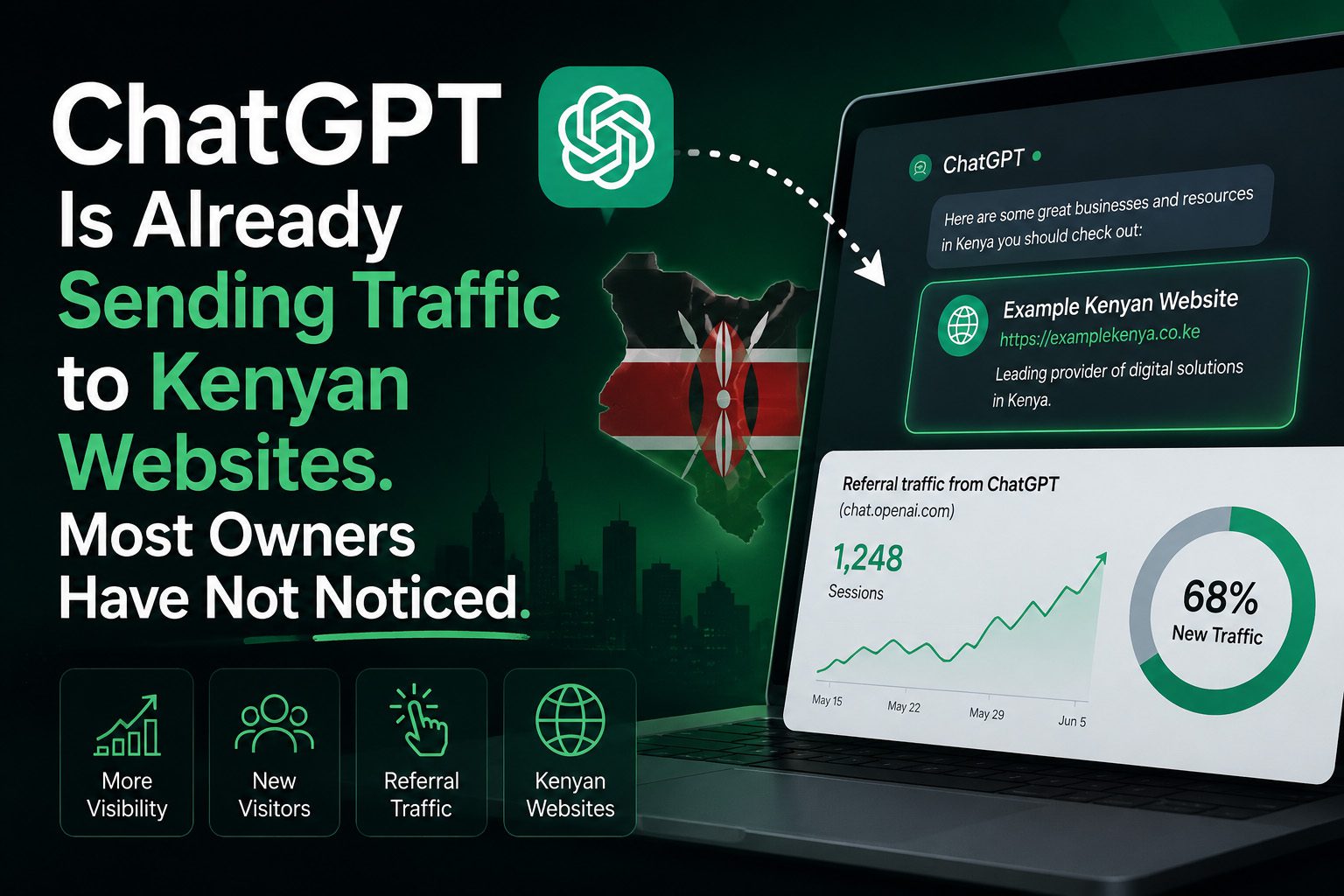
More buyers now ask ChatGPT, Perplexity, Gemini or Google’s AI Overviews which company to hire before they search the old way. That raises a practical question for every Kenyan business: when someone asks an AI assistant for a recommendation in your category, does your name come up, and why or why not?
We tested this for our own industry, digital marketing agencies in Kenya, in October and November 2026. We are including our own results, gaps and all, because the lessons apply to any business.
How we tested
We ran nine buyer-style questions through live web search, the retrieval step that AI assistants with web access use to find sources before they write an answer. We then recorded which pages came back and which agencies those pages named.
This is a proxy. It shows the sources AI tools are likely to read, not the exact wording any single assistant produces on a given day, which varies by tool, location and phrasing. A live test across several AI engines is our next step.
The results
| Buyer question | Were we surfaced? | What the sources relied on |
|---|---|---|
| Best digital marketing agency in Nairobi | Yes | Directory listings on Clutch, DesignRush and Sortlist, plus our own comparison article |
| Top PPC / Google Ads agency in Kenya | Yes | Clutch’s PPC and SEM category pages for Kenya |
| Best SEO agency in Kenya 2026 | Partly | DesignRush lists us; other directory lists such as GoodFirms and Krowdbase did not |
| Which agency should I hire in Nairobi (forum style) | Partly | Clutch, DesignRush and GoodFirms directories |
| Safari or tour marketing agency, East Africa | Weak | Specialist tourism marketing firms; we appeared only through one directory review |
| SEO company in Kenya | No | Pages from SEO-specialist firms and their own service pages |
| Web design company in Nairobi | No | Directory lists and established web design firms |
| GEO / AI search agency in Kenya | No | A small number of agencies with dedicated GEO pages, and a Kenyan business publication’s guide |
| Hotel marketing agency in Kenya | No | Hospitality specialists with industry association memberships |
What decided who got named
1. Third-party lists beat your own website
Where we appeared, it was mostly because independent directories with reviews listed us. Clutch matters especially: it publishes plain-text versions of its category pages, which AI systems can read easily, and those pages listed us for PPC and SEM in Kenya. Where we were absent, the lists that AI tools drew on simply did not include us.
2. Specialist footprints win specialist questions
For hotel and safari marketing, the agencies named were connected to the tourism industry off their own sites: association memberships, event partnerships, and coverage in travel publications. Hospitality work on our own website was not enough on its own.
3. Consistent facts build confidence
We found our team size and hourly rates described differently across directories. AI systems compare sources; contradictions make a business harder to describe confidently. We are standardising our details everywhere.
4. A generic name needs anchoring
“Nairobi Marketing” can also mean markets in Nairobi. Searches on our name sometimes returned pages about Village Market or Gikomba. Using the fuller name, Nairobi Marketing Agency, alongside our legal name Naimar Agency Ltd and our address, and linking our profiles together with structured data, helps machines connect the dots.
5. Self-ranked lists carry less weight
Our own best agency articles rank in search, but they list us first. Readers and AI tools increasingly discount lists where the author ranks themselves on top, unless the criteria are clear and the author’s position is disclosed. We are adding both.
6. Clear answer pages get used
Pages that answer one question clearly are a format AI tools quote readily. Direct answers on dedicated pages are easier to cite than answers buried in long service pages.
What we are changing
- A public official information page with consistent company facts, founder, address, services and published fees.
- Collecting client reviews on the directories AI tools read, especially for hospitality and travel work.
- Joining relevant industry bodies and contributing data to Kenyan business publications.
- Adding disclosures and criteria to our comparison articles.
- Publishing research like this, with sources others can cite.
Lessons for any business in Kenya, Tanzania, Uganda or Rwanda
- Ask the AI tools yourself. Try the questions your buyers ask, with and without your town or country, and note which sources are cited.
- Get onto the lists that are cited. Directories, association member lists, local business publications and review platforms in your industry.
- Make your facts identical everywhere: name, address, phone, founding year, services and prices.
- Publish clear answers to the questions buyers ask, on dedicated pages.
- Earn specialist credibility off your site in the sector you want to be recommended for.
For background, read what generative engine optimisation is, and see our AI search services if you want this audit for your own business.
Frequently asked questions
How does ChatGPT decide which businesses to recommend?
When it searches the web, it reads the pages search returns, such as directories, reviews, articles and company sites, and summarises what they say. Businesses named consistently by trusted sources are more likely to be mentioned.
Can I pay to be recommended by ChatGPT?
Not in the organic answer. Visibility comes from being present and well described in the sources AI tools read.
Do AI tools give the same answer every time?
No. Answers vary by tool, wording, location and date, which is why testing several prompts and repeating tests over time matters.
Is AI visibility different from SEO?
It overlaps heavily, because AI tools often rely on search results. The difference is a greater weight on third-party mentions, consistent facts and clearly answerable content.