
Hotel SEO
A hotel digital marketing plan starts with the pages guests actually need: room types, access, rates, dining, meetings and things to do nearby. Keep the search strategy and Google Business Profile accurate as the offer changes.
A hotel marketing agency in Kenya helps hotels, resorts, lodges and camps reach travellers and turn interest into direct bookings. Nairobi Marketing brings hotel SEO, advertising, websites and guest content together around what a property can offer. We start with the guests you want, the rooms and experiences you can sell, and the point where people stop short of booking. Make travel between Jomo Kenyatta International Airport and the property clear before guests reach checkout.
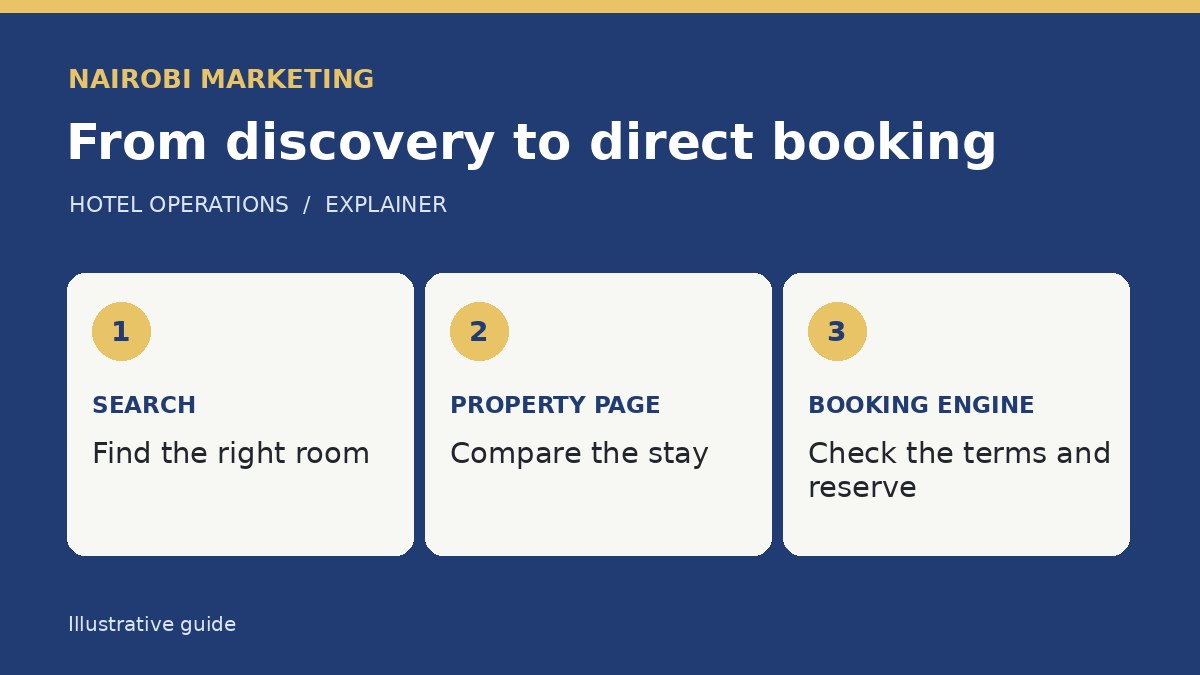
A hotel digital marketing plan starts with the pages guests actually need: room types, access, rates, dining, meetings and things to do nearby. Keep the search strategy and Google Business Profile accurate as the offer changes.
Use paid search for specific stay or event offers. Where an eligible rate feed is in place, compare Google Hotel Ads and other metasearch placements with brand search.
Plan social media around real room photography, short videos and what guests can expect on arrival. For influencer and creator stays, agree permissions and deliverables before the visit.
Give mobile visitors a clear hotel website with accurate rates, room details and a route to booking or WhatsApp enquiries. Check the handoff to the booking engine before promoting a campaign.
Use consented email marketing to follow up enquiries, share relevant offers and encourage repeat guests. Track how many bookings come from the email rather than reporting opens alone.
Check TripAdvisor and the main OTA reviews for recurring questions. Reputation management includes fixing unclear promises on the website and helping staff respond with practical information.
Publish verifiable information about board basis, location and access. AI search optimisation makes facts easier to interpret when travellers research through tools such as ChatGPT or Gemini.
Independent hotels and serviced apartments can make long-stay terms easier to compare. A boutique hotel or luxury resort may need branding that shows its setting and service rather than repeating standard room descriptions. Lodges, tented camps and villas should show how guests arrive, what is included and which experiences require a separate booking. Conference hotels need a path for MICE and corporate enquiries; restaurants and wedding venues need menus, capacities and a clear way to request a date.
A property near Moi International Airport can put late arrivals and onward transfers on its website.

Booking.com and Expedia can help a property reach guests who have not heard of it before. Before moving spending to direct bookings, compare net booking value after commissions, payment costs, advertising and cancellations. Confirm that room types, taxes and cancellation terms match what the guest sees at checkout. SiteMinder and Profitroom are examples of booking engines to assess within the property’s existing setup. See our hotel OTA management service for the distribution work.
If your hotel uses NightsBridge, ResRequest or HotelOnline, we can work with your team to assess how that setup handles availability, room details and the direct booking journey. Compare Booking.com and Expedia on net booking value rather than room nights alone. Use TripAdvisor reviews to spot what guests still need to know before they book.
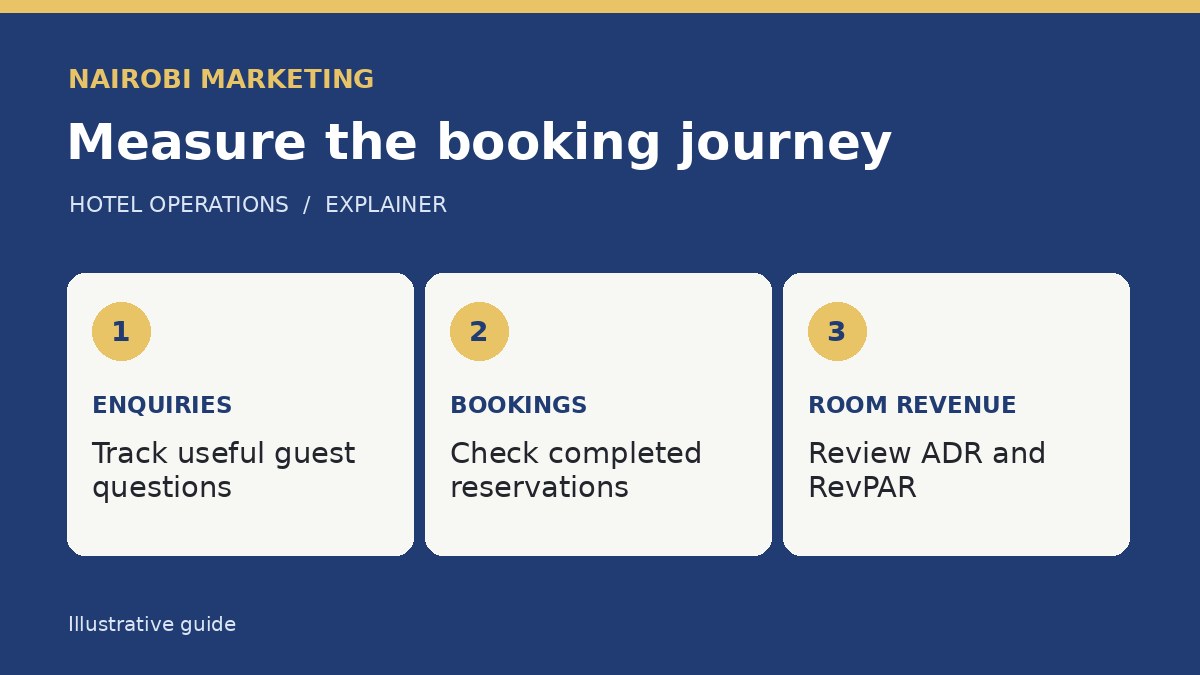
Measure qualified enquiries, booking completions and the share of direct bookings, including calls and WhatsApp conversations where practical. Keep room revenue and occupancy in view: average daily rate (ADR) shows the rate on sold rooms, and revenue per available room (RevPAR) accounts for unsold rooms too. Review length of stay and demand by segment before calling a campaign successful. For pricing and demand analysis, see hotel revenue and rate management.
Read the published African Tulip Hotel SEO case study and Retreat at Ngorongoro SEO case study. Use the published project records for context. A camp or lodge preparing a separate trip offer can also see our safari marketing agency in Kenya.
A city hotel promoting business stays, a beach property selling longer holidays and a lodge welcoming safari travellers need different messages. We establish the guest segments, the stay and the booking process before choosing the content or campaigns.
Room types, occupancy, meal plans, facilities and experiences should reflect the actual offer. We work with approved property information rather than a broad promise of luxury.
Guests may compare a location, room option, occasion or experience. Relevant property pages and supporting answers help them understand the stay before checking availability or enquiring.
Campaign messages and destinations should match the intended guests, dates and offer. A corporate enquiry and a leisure booking do not necessarily need the same campaign.
Show the rooms, setting, food and experiences the guest can actually expect. The production brief confirms access, participants, approvals and the material needed.
We review how visitors move from information to a booking engine, availability request or reservations contact. Technical integration and operational handover must be agreed, not assumed.
Website activity, enquiries, confirmed reservations and channel mix are different measures. We use the data the property can reliably supply and identify the limits of attribution.
Answer location, room, experience and booking questions.
Maintain clear property information, room content and listing consistency.
Review rate structures, seasons and distribution decisions within an agreed scope.
Support direct booking journeys and relevant demand.
A published hotel SEO project covering page discovery and indexing. Review the specific work and reporting context rather than treating it as a promise of occupancy.
Explore another hospitality engagement and the website/search questions it addressed. The property, brief and starting point matter when comparing projects.
Our case-study collection separates project work from client reviews. We use the documented scope and evidence instead of attributing every booking change to marketing.
Your management team may be in Nairobi while the property is in Naivasha, at the coast or elsewhere in East Africa. The marketing needs the property’s real setting and the customer markets you want to reach, not just the manager’s address.
We are based in Nairobi. Remote collaboration, travel and any on-site photography or production are confirmed for the engagement; these coverage pages do not claim an office at every destination.
Hotel marketing is quoted against the channels, property scope, content requirements and implementation needed. We confirm whether the engagement covers search, Google Ads, social content, website work or a coordinated programme before setting a fee.
SEO package fees, Google Ads management and social media production provide useful component-level reference points. They are not automatically added together or assumed to include every hotel requirement.
For listing and distribution tasks, see OTA management. For approved pricing structures and rate decisions, see hotel rate management. Your quotation identifies the access, systems, approval authority and responsibilities for those specialist services.
Use Watamu and the Indian Ocean coast in campaign copy only when the stay genuinely serves that trip.
Explore the same service in other markets:
In Nairobi, a conference hotel in Upper Hill may need a meeting enquiry page, while a Westlands property can make its restaurant and weekend offers easier to find. In Kilimani, an apartment hotel should explain how longer stays work; in Karen, a boutique property can show how guests plan a visit to Nairobi National Park.
For Mombasa hotels, separate airport transfers from beach access so guests know what they are booking. In Diani, explain the practical difference between arriving through Ukunda and staying near Diani Beach. A Kilifi property can show which rooms face Kilifi Creek and whether a visit to Mnarani fits into the stay. In Malindi, lead with the beach experience the property actually offers.
Kisumu properties can distinguish Lake Victoria views from waterfront access. Nakuru hotels can answer questions about Lake Nakuru before a day trip; Naivasha resorts can explain how to reach Lake Naivasha. A Nanyuki lodge can show where Mount Kenya and Laikipia fit into a visit, while a Meru hotel can separate town stays from trips to Meru National Park.
Look for a team that understands distribution, can explain what it will measure and asks how your reservations team works. A hotel targeting Rift Valley road trips can put parking, check-in and onward travel on one page. Show whether trips to the Maasai Mara National Reserve are arranged by the hotel or handled separately.
Start by checking the room pages, mobile booking steps and booking engine. Fix those before deciding whether a rebuild is justified.
We can improve the direct booking journey and measure where guests drop out. Bookings depend on demand, price and the available inventory.
These offers can have separate pages and enquiry forms if the property can respond with useful details.
Review occupancy and lead time before changing offers. Separate leisure, corporate and group business so one promotion does not obscure how the others behave.
It identifies priority audiences, channels, deliverables, approvals and what is reported. Third-party production or advertising costs are scoped separately.
Share the property website, room offer, location and source markets. Tell us which booking channels and systems you use, who approves changes and what you want the marketing to improve.