
Hotel SEO
A hotel digital marketing plan starts with the pages guests actually need: room types, access, rates, dining, meetings and things to do nearby. Keep the search strategy and Google Business Profile accurate as the offer changes.
Nairobi Marketing helps hotels, resorts and lodges in Zanzibar improve search visibility, reach suitable guests and earn more direct booking enquiries. Stone Town hotels, Nungwi resorts and Pemba properties need distinct arrival and beach-access information.
A hotel digital marketing plan starts with the pages guests actually need: room types, access, rates, dining, meetings and things to do nearby. Keep the search strategy and Google Business Profile accurate as the offer changes.
Use paid search for specific stay or event offers. Where an eligible rate feed is in place, compare Google Hotel Ads and other metasearch placements with brand search.
Plan social media around real room photography, short videos and what guests can expect on arrival. For creator stays, agree permissions and deliverables before the visit.
Give mobile visitors a clear hotel website with accurate rates, room details and a route to booking or WhatsApp enquiries. Check the handoff to the booking engine before promoting a campaign.
Use consented email marketing to follow up enquiries, share relevant offers and encourage repeat guests. Track how many bookings come from the email rather than reporting opens alone.
Check TripAdvisor and the main OTA reviews for recurring questions. Reputation management includes fixing unclear promises on the website and helping staff respond with practical information.
Publish verifiable information about board basis, location and access. AI search optimisation makes facts easier to interpret when travellers research through tools such as ChatGPT or Gemini.
Independent hotels and serviced apartments can make long-stay terms easier to compare. A boutique hotel or luxury resort may need branding that shows its setting and service rather than repeating standard room descriptions. Lodges, tented camps and villas should show how guests arrive, what is included and which experiences require a separate booking. Conference hotels need a path for MICE and corporate enquiries; restaurants and wedding venues need menus, capacities and a clear way to request a date.
Stone Town hotels, Nungwi resorts and Pemba properties need distinct arrival and beach-access information.
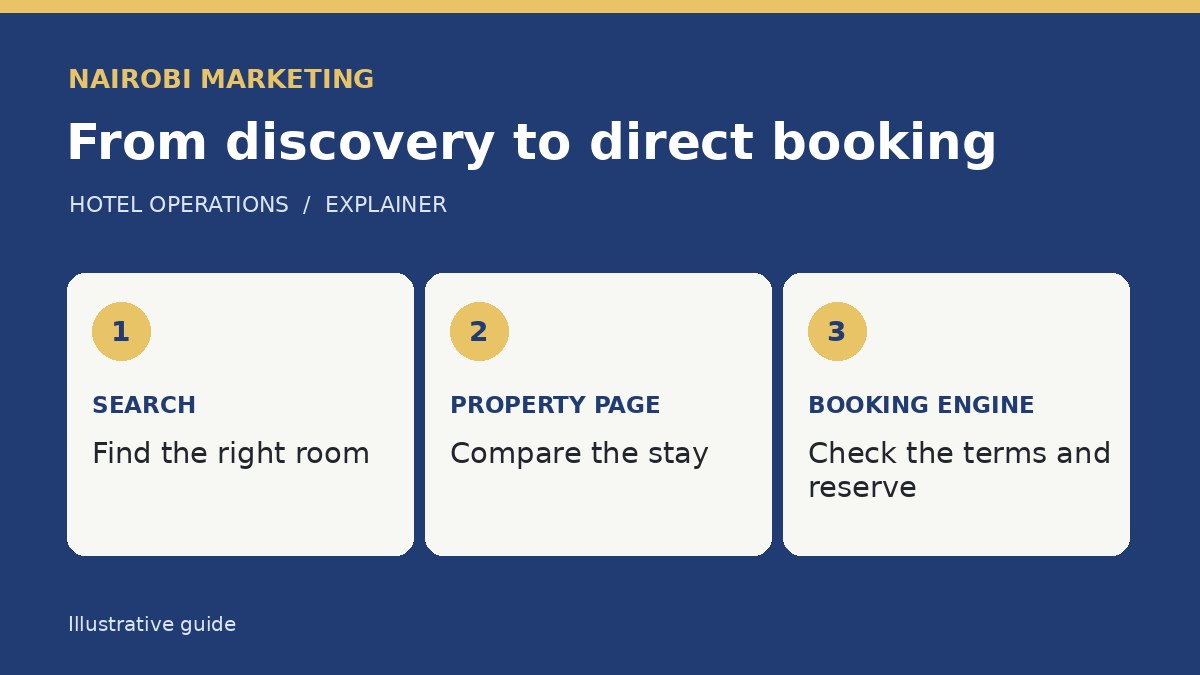
Booking.com and Expedia can help a property reach guests who have not heard of it before. Before moving spending to direct bookings, compare net booking value after commissions, payment costs, advertising and cancellations. Confirm that room types, taxes and cancellation terms match what the guest sees at checkout. SiteMinder and Profitroom are examples of booking engines to assess within the property’s existing setup. See our hotel OTA management service for the distribution work.
If your hotel uses NightsBridge, ResRequest or HotelOnline, we can work with your team to assess how that setup handles availability, room details and the direct booking journey. Compare Booking.com and Expedia on net booking value rather than room nights alone. Use TripAdvisor reviews to spot what guests still need to know before they book.
Stone Town hotels, Nungwi resorts and Pemba properties need distinct arrival and beach-access information.
Measure qualified enquiries, booking completions and the share of direct bookings, including calls and WhatsApp conversations where practical. Keep room revenue and occupancy in view: average daily rate (ADR) shows the rate on sold rooms, and revenue per available room (RevPAR) accounts for unsold rooms too. Review length of stay and demand by segment before calling a campaign successful. For pricing and demand analysis, see hotel revenue and rate management.
A Zanzibar stay should be described by its actual setting, room offer and experience, rather than an island-wide promise. Whether the brief concerns Paje, another part of Zanzibar or a business you manage from here, the intended customer guides the work.
Nairobi Marketing is based in Nairobi. We agree remote collaboration, meetings and any on-site production needed for your Zanzibar brief before work starts.
Someone comparing a Zanzibar stay needs to understand this property, not just the destination. Which room is shown? What is included in the rate? How do transfers work? Is the guest making a confirmed booking or asking for availability? Your website, campaign and reservation response should give consistent answers.
Use current, accurately labelled photographs, approved room descriptions and clear inclusions. Confirm the property’s actual setting, access arrangements and facilities before publishing a claim about the stay.
Choose guest markets and travel windows around the property’s priorities. Link the creative to a relevant room, package or enquiry page rather than sending every visitor to a general homepage.
Ask for the dates, party size and other information the reservations team needs. Agree who handles availability, quotations and follow-up, and distinguish an enquiry from a confirmed reservation.
Search visibility, advertising and social production can be combined within the brief. For website improvements, the Zanzibar web design service can address the guest’s route from property information to contact or booking.
Tell guests whether visits to Forodhani Gardens and Prison Island are guided or self-arranged.
Hotel marketing is quoted to scope. We first identify whether the immediate issue is visibility, unclear room information, weak creative, an awkward booking journey or follow-up after an enquiry.
The proposal specifies the website or content work, campaigns, production, approvals and reporting included. It confirms currency, billing period, media budget and any separate travel, booking-system or third-party charges. Photography must represent your actual property; a content plan does not assume unlimited on-site production.
Discuss the property and request a quotation
Use Jozani Chwaka Bay National Park and spice farms on booking pages only if the offer includes or helps guests reach them.
Hotel marketing helps guests discover and assess the property. OTA management in Zanzibar concerns the agreed listing and channel tasks. Hotel rate management concerns the agreed rate and availability decisions. They can support the same commercial plan, but they are not automatically bundled into every campaign.
The property approves factual content, booking policies and commercial changes. We confirm the systems involved, authorised users and escalation process before working on listings or rates. Inventory synchronisation, reservation handling and revenue-management decisions need explicit responsibilities.
The African Tulip SEO case study is a separate hotel project record. It can help explain the website and search work to discuss; it is not evidence of a Zanzibar property result or a promised occupancy increase.
The Zanzibar Commission for Tourism is a source for checking destination wording before publication. If a property describes a trip to Chumbe Island, show guests who arranges it and when it is available.
For properties in Zanzibar, build campaigns around what guests can book and how they reach the property. For Unguja and Pemba, make it easy to tell which island the property is on before guests ask about travel. For Stone Town and Zanzibar City, give guests a clear arrival plan if their accommodation is in Stone Town and their activity starts elsewhere in Zanzibar City.
For Nungwi and Kendwa, photograph the actual beach approach and explain it on a dedicated property page. For Paje and Jambiani, help guests compare what can be done on site with what needs a separate booking.
For Matemwe and Mnemba Atoll, explain whether an advertised Mnemba Atoll excursion starts near Matemwe and who runs it. For Michamvi and Kiwengwa, separate the reasons to choose Michamvi from the services available at a resort in Kiwengwa. Use the property’s own photographs and guest questions to decide which details belong on each page. The aim is to help someone choose the stay and contact the right person before comparing another listing. For a separate brief across the water, see our same service in mainland Tanzania.
Explore the same service in other markets:
Track qualified enquiries, completed direct bookings and room revenue against campaign and booking costs.
Yes. Start by testing mobile room pages and the booking flow before deciding whether it needs a rebuild.
We scope search, paid campaigns, content or the booking journey around the property’s commercial priorities.
Show which airport transfers or excursions are included, who arranges them, and what guests need to book separately. Use the same wording on the room page and at checkout.
They can share a budget if they target the same trip, but give each stay a landing page that explains its location, access and reason to book.
Tag campaign links and record booking-engine enquiries, calls or WhatsApp conversations where practical. Compare completed bookings and acquisition cost before increasing spend.
Share the property website, location, room types and the guests you want to reach. Tell us which booking channels you use and whether your priority is direct enquiries, campaigns or distribution support.