What Is a Retrieval-First Website? SEO and AEO by Design
A retrieval-first website is built so that search engines and AI assistants can find it, understand each page and lift clear answers out of it.

A retrieval-first website is built so that search engines and AI assistants can find it, understand each page and lift clear answers out of it. It is designed for two jobs at once: ranking in Google’s normal results (search engine optimisation, or SEO) and being quoted in AI answers from Google AI Overviews, ChatGPT, Gemini and Perplexity (AEO, or answer engine optimisation).
There is no secret AI code behind this. Google’s own guidance says there are no extra requirements and no special markup needed to appear in AI Overviews or AI Mode, and that normal SEO best practice still applies. Retrieval-first design simply takes those fundamentals seriously from the first wireframe, instead of patching them in after launch.
Why “retrieval” is the right word
When someone asks an AI assistant a question that needs current information, the system searches an index, retrieves a handful of pages or passages, and writes an answer from them. Google’s AI features work on top of Google’s normal crawling, indexing and ranking. ChatGPT’s search feature uses its own crawler, OAI-SearchBot, alongside third-party search providers.
Either way, your page has to clear the same three hurdles:
- Found. The crawler can reach the page and read its content.
- Understood. The system can tell what the page is about and what each section answers.
- Chosen. Among all the pages it could use, yours is clear, trustworthy and adds something useful.
Most websites fail at the first or second hurdle without knowing it. That is the gap retrieval-first design closes.
Hurdle one: can the page be found?
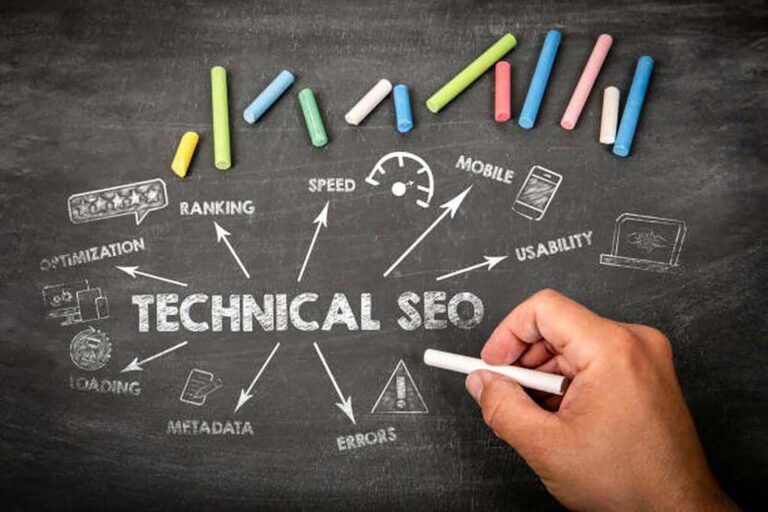
Content the crawler can read
Important text should be in the page’s HTML, not hidden behind tabs that only load on click, inside images, or in scripts that crawlers may not run. Prices, service descriptions and FAQs set inside images are invisible to many systems.
No accidental blocks
A surprising number of sites block crawlers by mistake through robots.txt, a security plugin or a firewall setting at the host. Check that Googlebot and Bingbot can reach your pages, and decide deliberately about AI crawlers such as OAI-SearchBot and PerplexityBot. Note that Google-Extended, Google’s control for Gemini training, does not affect whether you appear in Google Search.
A clear path to every page
Pages need internal links from related pages and an up-to-date XML sitemap. A page nobody links to is hard to find, for people and machines alike.
Speed on real phones
Most Kenyan visitors arrive on mid-range Android phones over mobile data. A page that takes eight seconds to load loses people, and slow, heavy pages are also harder for crawlers to process at scale.
Hurdle two: can the page be understood?
One clear topic per page
A page that tries to cover web design, SEO, hosting and branding at once gives search systems a muddy signal. Separate pages for separate services, each with a clear title and H1, are easier to understand and easier to cite.
Headings that match real questions
People ask “how much does a website cost in Kenya?” or “do I need a .co.ke domain?”. Headings that mirror these questions tell retrieval systems exactly what each section answers.
Answer first, then detail
Put the direct answer in the first one or two sentences under each heading, then explain. AI systems often lift a single passage, so a passage that answers the question on its own is far more useful than one that builds up slowly.
Consistent business facts
Your business name, address, phone number, services and prices should match everywhere: your site, your Google Business Profile, directories and social profiles. Conflicting facts make systems less confident, and less confident systems are less likely to name you.
Structured data where it fits
Schema markup for your organisation, local business details, products and articles helps search engines read your information, and some types can still earn rich results in normal search. Google stopped showing FAQ rich results in May 2026, though FAQ markup does no harm. Google is clear that no special schema is required for its AI features, so treat structured data as good housekeeping, not a shortcut.
Hurdle three: will the page be chosen?
Once a system can read your page, it still has to pick it over competitors. Three things matter most.
- Information gain. Pages that add something others lack, such as local prices, real examples, original data or a clear comparison, give AI answers a reason to cite them. A page that repeats what ten others say adds nothing.
- Trust signals. A named author with relevant experience, a real address, reviews, dates showing when content was updated, and links to official sources all support trust.
- Freshness where it matters. For prices, laws and fees, out-of-date information is a reason to skip you. Show when key facts were last checked.
What a retrieval-first build looks like in practice
| Stage | Typical website | Retrieval-first website |
|---|---|---|
| Planning | Pages chosen by what the business wants to say | Pages mapped to the real questions and searches customers make |
| Content | Long introductions, answers buried | Direct answers first, detail after, one topic per page |
| Design | Key text inside sliders, images or tabs | Key text in readable HTML, visible on load |
| Technical | Default settings, unchecked crawl access | Crawl access verified, sitemap, schema, fast mobile load |
| Trust | Generic “about us” | Named people, real address, reviews, sources, update dates |
| Launch | Site goes live | Search Console and Bing Webmaster Tools set up, indexing checked |
How to tell if your current site is retrieval-ready
Run these quick checks:
- Search Google for site:yourdomain.co.ke. Are all your important pages indexed?
- Open Google Search Console. Are pages listed as “crawled, currently not indexed” or blocked?
- Ask ChatGPT, Gemini and Perplexity the three questions customers most often ask you before buying. Are you mentioned? Is the information about you correct?
- Pick your most important service page. Is the answer to “what is it, who is it for, what does it cost” visible in the first screen?
- Compare your business details on your site, Google profile and two directories. Do they match exactly?
If several of these fail, the problem is rarely “AI”. It is usually the foundations.
Retrieval-first does not mean writing for robots
Everything that helps retrieval also helps people. Clear headings help a busy reader scan. Direct answers respect their time. Honest prices and real examples build trust. The aim is a site that a person and a machine can both understand quickly, which is what good websites have always been.
What has changed is the cost of getting it wrong. When an AI answer names three businesses and yours is not one of them, the customer may never see a list of links at all.
Notes for Tanzania, Uganda and Rwanda
For businesses serving several East African markets, retrieval depends on language and structure as much as anything else. Customers in Tanzania often search in Swahili, and AI tools answer in the language of the question. Separate, properly marked language versions of key pages, and separate pages for each country where offers or prices differ, give systems a clean answer to retrieve for each audience.
Our websites start from KES 60,000 and are built retrieval-first as standard: crawlable structure, answer-first content, schema and verified indexing. See what is included on our web design page. If your site already exists but does not appear in AI answers, our AI search optimisation service starts with an audit, and our guide on why websites fail to rank in Kenya covers the most common foundation problems.