
The Rules: Kenya’s 2027 Election Laws for Digital Campaigns
Election laws Kenya will apply to 2027 are already in force. A plain-language guide to IEBC spending limits, the fundraising ban, bribery, the silence period, data protection, cybercrime and platform rules for digital campaigns.

Kenya’s 2027 campaign is already running on our phones, months before the first official rally. What many aspirants, digital teams and voters have missed is that the law is already running too. The election laws Kenya will apply to the 10 August 2027 General Election came into force on 20 August 2026, when the IEBC opened the election period. This guide explains, in plain language, every rule that touches a digital campaign: spending limits, the fundraising ban, bribery, the silence period, opinion polls, hate speech, cybercrime, data protection, children, influencers, gambling, AI and platform policies.
This playbook covers Fair Play, Yellow Card and Red Card tactics for educational purposes only. Nairobi Marketing does not provide services to political candidates, parties or campaigns, and has no affiliation with any candidate or party. See the full disclaimer below.
This is one chapter of our full guide, Political Campaign Digital Marketing in Kenya: The 2027 Playbook. If you are new to the series, the pillar explains the three cards (🟢 Fair Play, 🟨 Yellow Card, 🟥 Red Card) and the verdict scale used below.
A personal note. I served as a presiding officer in 2017 and on a constituency ICT team in 2022. On both occasions, the people who got into trouble were rarely the ones who meant harm. They were the ones who did not know the rules. Sheria ni msumeno: the law cuts both ways, and it does not care whether you knew.
Election Laws Kenya at a Glance
Here is the short version. Each row is explained further down.
| Law or rule | What it covers online | Key date or penalty |
|---|---|---|
| Elections Act, Section 26 | Aspirants taking part in public fundraising, including M-Pesa appeals | Ban from about 10 December 2026 |
| Election Offences Act | Bribery, undue influence, aiding and abetting, Code of Conduct breaches | In force since 20 August 2026; bribery up to KES 2 million and/or 6 years |
| Election Campaign Financing Act and 2026 Regulations | Spending limits, contributions, expenditure reports | Limits gazetted 7 August 2026 |
| Opinion Polls Act | Publishing election polls | No polls on election day or in the 5 days before; up to KES 1 million and/or 1 year |
| National Cohesion and Integration Act | Hate speech and ethnic contempt, including posts | Section 13: up to KES 1 million or 3 years |
| Computer Misuse and Cybercrimes Act | False publication, misuse of computer systems | Parts of the 2025 amendments struck down in July 2026 |
| Data Protection Act 2019 | Voter data, SMS lists, WhatsApp lists | ODPC fines up to KES 5 million or 1% of turnover |
| Constitution Article 53 and Children Act 2022 | Images and stories of minors | Child’s best interest comes first |
| MCK Election Coverage Guidelines 2027 | Paid influencer posts, political ads in media | Disclosure of paid election messages |
| Gambling Control Act 2025 | Spin-to-win games, cash prize draws | Licence from the GRA; unlicensed gambling up to KES 50 million |
| Platform policies | Ads, disclosure, fake accounts, manipulated media | Enforced by Meta, Google, TikTok, X and Reddit |
The Election Period Is Already Open
The single most important fact in this article: Kenya is not waiting for May 2027. IEBC Gazette Notice No. 13497 of 20 August 2026 brought the Electoral Code of Conduct and the Election Offences Act into force for the 2027 election. The same notice set the official campaign window: from candidate registration, which will not happen before 29 May 2027, to 7 August 2027. The IEBC has said campaigning outside that window is unlawful.
So there are two clocks. The election period, which governs offences like bribery, started in August 2026. The campaign period, which governs open campaigning, starts in mid-2027. Many digital teams are confusing the two.
The loophole that closed
In June 2025, a High Court judgment noted there was no law to act on campaign violations committed outside the election period, and directed the Attorney General to fix the gap within 12 months. For more than a year, that gap was where a lot of early digital campaigning lived: cash giveaways on Facebook Lives, M-Pesa “weekly winners” and gifts to constituents dressed up as goodwill.
That loophole closed on 20 August 2026. Once the IEBC opened the election period, the Election Offences Act applied. Tactics that sat in a grey area until August 2026 are now 🟥 Red Card. If someone tells you “the campaigns haven’t started, so it doesn’t count,” they are reading an old rulebook.
Key dates for digital campaigns
| Date | What happens |
|---|---|
| 7 August 2026 | IEBC spending limits gazetted |
| 20 August 2026 | Election period opens; Election Offences Act and Electoral Code of Conduct in force |
| About 10 December 2026 | Section 26 fundraising ban starts (8 months before polling) |
| Not before 29 May 2027 | Candidate registration; official campaign window opens |
| 5 August 2027 | Opinion poll publication blackout begins |
| 7 August 2027 | Campaign period closes; the 48-hour silence begins |
| 10 August 2027 | Election day |
| Within 7 days of the presidential declaration | Presidential petitions to the Supreme Court |
| Within 28 days of declaration | Petitions for all other seats |
The IEBC and Campaign Financing: 2027 Spending Limits
The Election Campaign Financing Act sets the framework, and the Election Campaign Financing Regulations 2026 apply to the 2027 election. On 7 August 2026, the IEBC gazetted the spending caps in Gazette Notice 12251, as reported by Citizen Digital and Kenyans.co.ke.
| Office or entity | 2027 spending limit |
|---|---|
| President | KES 6.11 billion |
| Political parties | KES 24.45 billion |
| Governor, Senator, Woman Representative | KES 28.7 million (Lamu) to KES 181.3 million (Nairobi) |
| Member of Parliament | KES 15.4 million (Wundanyi) to KES 100.4 million (North Horr) |
| Member of County Assembly | KES 3.63 million (Ziwani/Kariokor) to KES 22.1 million (Turbi) |
The rules also cap how much any single source can contribute, reported at 20 per cent. Confirm exactly how that cap is calculated with an advocate before relying on it.
Why does this matter for digital? Because digital spend is campaign spend. Facebook and Instagram ads, Google and YouTube ads, creator fees, video production, bulk SMS, software and the salaries of a social media team all count. And unlike cash at a rally, much of it leaves a public trail. Meta’s Ad Library shows every political ad, the page that ran it and the declared payer, so anyone can compare what a campaign spent online with what it reports.
🟢 Fair Play (Siasa Safi): book every digital shilling
Keep one ledger for all digital costs: ads, creators, content, tools, SMS and staff. Match ad accounts to the campaign’s declared payer name. It is boring, and it is the best protection in a petition.
🟨 Yellow Card (Siasa za Ujanja): spend routed through “issue” pages and friends
Ads that praise a candidate or attack a rival are run from pages that look independent, such as a “county development” page or a “youth voice” page, and paid for by a friendly business or supporter, so the cost never appears on the candidate’s books.
Can they get away with it? Sometimes. Small spends slip through, but the Ad Library shows the payer, and journalists and rival campaigns now check it.
What happens if caught: Questions over the campaign’s expenditure report, platform action for misleading disclaimers, and evidence for an election petition.
Section 26 of the Elections Act: The Fundraising Ban
Section 26 of the Elections Act bars aspirants from taking part, directly or indirectly, in any public fundraising in the eight months before a general election. For 10 August 2027, that starts around 10 December 2026.
Online, “public fundraising” is not only the church harambee. It includes a paybill appeal posted on TikTok, a WhatsApp forward asking supporters to send money for a cause, and a Facebook Live where the aspirant announces contributions. The word “indirectly” matters too: an appeal run by a close aide or a friendly page, with the aspirant as the face, can still be caught.
🟥 Red Card (Siasa Chafu): fundraising appeals inside the ban window
What it is: An aspirant leading or fronting a public appeal for money after the ban starts, often through a proxy or a “charity” account.
Why campaigns use it: Viral appeals build name recognition fast, as our case study on the Zido Effect and the viral harambee shows.
How it gets caught: The appeal itself is public. Screenshots, video and paybill details are evidence.
Can they get away with it? Sometimes. Enforcement has been slow in past elections, but online appeals leave a perfect record for complaints and petitions.
What happens if caught: Complaints to the IEBC, possible legal action and evidence used against the candidate in a petition.
The Election Offences Act: Bribery, Treating and Aiding and Abetting
The Election Offences Act is the law most digital campaigns underestimate. Three parts matter most online.
Bribery (Section 9)
Section 9 makes it an offence, during an election period, to directly or indirectly offer a bribe to influence how someone votes, or whether they vote. The penalty is a fine of up to KES 2 million, up to six years in prison, or both. At the Ol Kalou by-election in July 2026, an IEBC commissioner warned that both the giver and the receiver break the law.
Digitally, that covers M-Pesa sent to voters after a Live, airtime or data bundles for followers who share a post, “weekly winners” drawn from a candidate’s page, and gifts announced in a TikTok video.
What about treating?
You will hear the word “treating”: providing food, drink or entertainment to win votes. It was a separate offence under the old Elections Act of 2011. As constitutional scholar Jill Ghai pointed out in The Star, treating did not appear as a separate offence when the Election Offences Act replaced those provisions in 2016. That is not a green light. A meal, a mattress or a gas cylinder given to influence a vote can still be a bribe under Section 9. Treat “treating” as bribery with a menu.
Aiding and abetting (Section 19)
Section 19 extends liability to anyone who aids, abets or assists an election offence. This is the clause digital teams, content agencies and influencers should read twice. If you design the poster for the cash giveaway, run the Live, manage the paybill or post the “winners” list, you may be part of the offence, not just the candidate.
Undue influence and the Code of Conduct
The Act also covers undue influence, such as threats or intimidation to force a vote, which includes threats made online. And Section 20 makes breaching the Electoral Code of Conduct an offence in itself.
🟥 Red Card: online cash giveaways and “weekly winners”
What it is: A candidate’s page promising M-Pesa, airtime or prizes to followers who comment, share or attend, with winners announced on camera.
Why campaigns use it: It drives huge engagement cheaply, and it sat in the loophole until August 2026.
How it gets caught: The campaign films its own evidence. Rival agents screenshot it, and complaints go to the IEBC and the DPP.
Can they get away with it? Sometimes. Prosecutions for bribery have historically been rare, but the record is permanent and the law now clearly applies.
What happens if caught: Criminal charges for the candidate and helpers, Code of Conduct sanctions, and evidence in a petition. If prizes are drawn by chance, there is a second problem under the Gambling Control Act (see below).
The Silence Period, the Polls Blackout and Who Declares Results
The 48-hour silence
Campaigning ends 48 hours before polling. For 2027, the campaign period closes on 7 August. At the Ol Kalou by-election in July 2026, campaigns closed at 6pm ahead of the vote. Paid ads, new campaign posts and fresh influencer content inside the silence break the rules, even if the platform does not stop them. Our upcoming Election Day guide covers what campaigns do in those 48 hours.
The opinion polls blackout
The Opinion Polls Act bars publishing election opinion polls on election day and in the five days before it. The penalty is a fine of up to KES 1 million, up to one year in jail, or both. For 2027, the blackout starts on 5 August. That covers a poll graphic on X or a “latest numbers” TikTok just as much as a newspaper front page.
Only the IEBC declares results
Under Section 39 of the Elections Act, the IEBC declares results, and the IEBC Chair declares the presidential result. In the 2017 Maina Kiai case, the court held that presidential results declared at the constituency are final. Media houses and observers may run provisional tallies, clearly labelled as such.
In 2024, Parliament passed an amendment targeting IEBC staff who fail to declare results or unreasonably delay them. We have not found a specific offence for a private person who announces a winner early. But a fake Form 34A, an invented result or a doctored “concession” can fall under the Code of Conduct, the cybercrime law and platform rules on election misinformation.
🟥 Red Card: premature victory claims and fake results
What it is: A campaign declares victory before the IEBC, or shares doctored result forms and graphics to create a sense of inevitability or grievance.
Why campaigns use it: The first number people see shapes what they believe, and it sets up a “we were robbed” story if the real result differs.
How it gets caught: Agents’ photos of the real Form 34As, the IEBC results portal and fact-checkers comparing forms line by line.
Can they get away with it? Sometimes. Fakes are usually debunked within hours, but the damage spreads faster than the correction.
What happens if caught: Platform removal, possible prosecution and serious harm to public peace. 2007 showed what a rumour can do.
Election Petition Deadlines
| Office | Where to file | Deadline | Decided within |
|---|---|---|---|
| President | Supreme Court | 7 days after the declaration | 14 days; fresh election within 60 days if annulled |
| Governor, Senator, Woman Rep, MP | High Court | 28 days after the declaration | 6 months |
| MCA | Designated magistrate’s court | 28 days after the declaration | 6 months |
Sources: Article 140 of the Constitution and the Supreme Court’s 2014 ruling in Joho v Shahbal on the 28-day limit. For digital teams, the lesson is simple: screenshots, Ad Library records, archived posts and dated videos are evidence. Keep them from day one.
Speech Online: NCIC, the Computer Misuse and Cybercrimes Act and Defamation
The NCIC Act: posts are speeches
The National Cohesion and Integration Commission has warned that digital posts carry the same legal consequences as public speeches. Section 13 of the National Cohesion and Integration Act covers hate speech, with a penalty of up to KES 1 million or three years in prison, and Section 62 covers words meant to stir up ethnic hatred or contempt. In August 2026, an NCIC-led group of state agencies announced a joint crackdown on hate speech and incitement, warning candidates and their supporters of prosecution and regulatory action.
A meme, a voice note in a WhatsApp group or a comment under a rival’s video all count. So does a page admin who keeps hateful comments up to boost engagement.
The Computer Misuse and Cybercrimes Act Kenya: a law still in motion
The Computer Misuse and Cybercrimes Act of 2018 covers offences committed through computers and phones, including false publication and the publication of false information (Sections 22 and 23), unauthorised access to systems and data, and cyber harassment. Those false publication sections have faced repeated court challenges, so take legal advice on how they apply to a specific post.
In October 2025, the President signed the Computer Misuse and Cybercrimes (Amendment) Act, 2025. The High Court suspended key provisions within a week. On 2 July 2026, the High Court declared Sections 6(1) and 27(1) of the amendment unconstitutional: the power to order websites and platforms blocked, and the broad new cyber harassment offence with its KES 20 million fine. Other challenges are still before the courts.
The practical point: the cybercrime law is moving, but it has not gone away. Doctored videos, fake documents and hacked accounts remain criminal, and campaigns should not plan around a court case they hope to win.
Defamation and innuendo
Defamation in Kenya is now a civil matter. The High Court struck down criminal defamation under the Penal Code in 2017, but a candidate can still be sued under the Defamation Act and ordered to pay damages. Elections are where most defamation risk lives online.
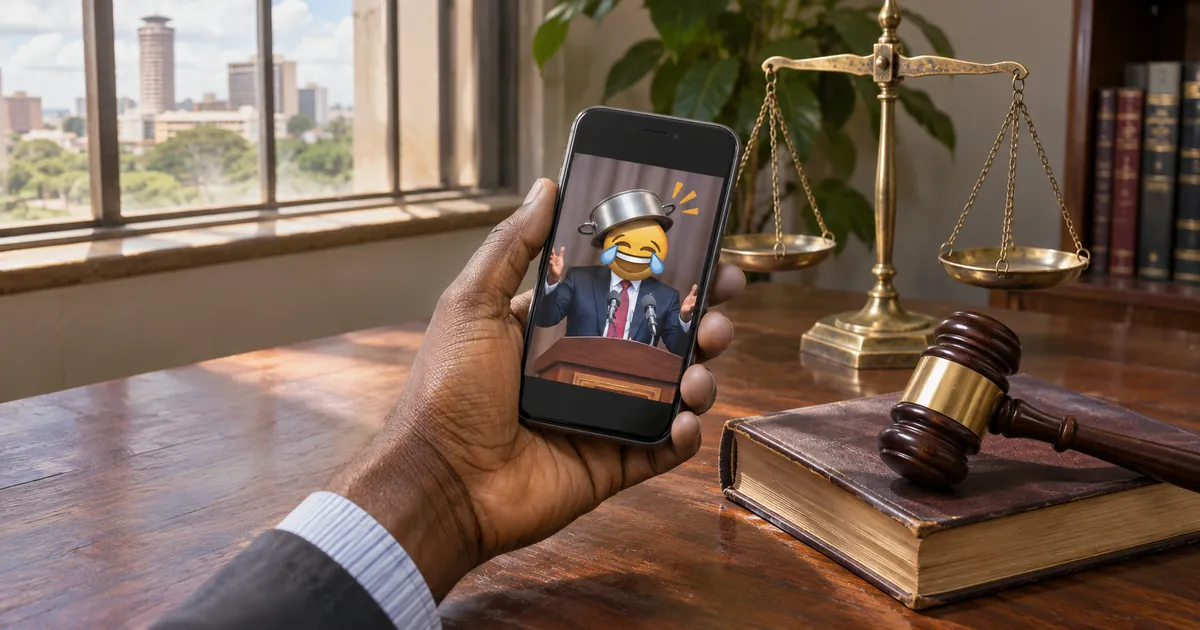
The trap is innuendo. A post does not have to name someone to defame them. If ordinary readers would understand who you mean, a coded nickname, a cropped photo or a “some leader in this county” story can still be defamatory. Our upcoming guide on memes and the Defamation Act covers this in detail.
🟨 Yellow Card: coded nicknames and “I never named him” posts
Can they get away with it? Often. Most rivals do not sue, and the posts sit in a grey area.
What happens if caught: A demand letter, a takedown, or a defamation suit where the court asks one question: would readers know who you meant?
🟥 Red Card: doctored clips and ethnic bait
What it is: Edited videos that change what someone said, and posts built to set communities against each other.
How it gets caught: The original footage surfaces, fact-checkers compare versions, and the NCIC monitors platforms.
Can they get away with it? Sometimes. Many posts spread unpunished, but the NCIC, police and platforms are watching more closely in this cycle than ever before.
What happens if caught: Prosecution under the NCIC Act or cybercrime law, a defamation suit, account removal and lasting reputational damage.
Data Protection Act Kenya Summary for Campaigns
Every phone number, WhatsApp contact, email address and voter list a campaign holds is personal data under the Data Protection Act 2019. Here is the short summary for political use:
- Lawful basis. Collect personal data with consent or another lawful basis, for a stated purpose, and do not use it for something else.
- Register. Political canvassers must register with the Office of the Data Protection Commissioner (ODPC), whatever their size. The ODPC has published a Guidance Note for Electoral Purposes.
- Direct messages need consent. Political SMS and WhatsApp blasts are direct marketing. People must have opted in and must be able to opt out easily.
- Sensitive data needs extra care. The Act treats ethnic origin, religious belief and similar categories as sensitive. Targeting voters on those lines is a legal risk as well as an ethical one.
- Delete when done. Keep data only as long as the purpose needs it.
The ODPC can fine up to KES 5 million or 1% of annual turnover, whichever is lower, and it can order compensation. We found no ODPC ruling on political SMS yet. But commercial cases show complaints can win: Goodtimes Africa was ordered to pay KES 700,000 to one person in 2024, and Platinum Credit was ordered to pay KES 400,000. Smaller awards have ranged from KES 20,000 to 50,000.
🟢 Fair Play: build your own consented list
Offer something useful, such as a polling station finder, the manifesto or town hall registration, and say clearly how the number will be used. Add an opt-out to every message. This is the list that actually responds.
🟥 Red Card: bought contact lists and bulk SMS from untraceable lines
What it is: Political texts sent to people who never gave their number, often from personal lines registered to someone else.
Can they get away with it? Often. One recipient rarely goes to the trouble of a complaint.
What happens if caught: An ODPC complaint is free. Screenshot the message and report the number. Compensation awards against commercial senders show the risk is real. Our upcoming Red Card Files cover this pattern in detail.
The Children Act: Minors in Campaign Content
Article 53 of the Constitution and the Children Act 2022 put a child’s best interests first and protect children from harmful exposure. Campaign content does not get an exception. In one case, the National Gender and Equality Commission condemned a Nairobi official over a video of a vulnerable street child.
The safe line: guardian consent, no names, limited face shots, and never film a child at their lowest moment. Children should not be used as props in rallies, adverts or charity videos. Our Zido Effect guide sets out content rules that protect beneficiaries.
MCK Guidelines 2027: Influencers Must Disclose
The Media Council of Kenya’s Election Coverage Guidelines 2027 require disclosure when influencers and creators share election messages for payment, and require media houses to scrutinise political adverts and sponsored content. In short: if you are paid, say so.
🟨 Yellow Card: undisclosed paid influencers
Can they get away with it? Sometimes. Single posts are hard to prove, but coordinated campaigns leave patterns: identical wording, the same hour, the same accounts every time, and leaked briefs.
What happens if caught: MCK action, platform penalties, public exposure for the creator and the campaign, and a loss of trust that is hard to win back.
The Gambling Control Act: Why Cash Spin Wheels Are Out
The Gambling Control Act 2025 replaced the BCLB with the Gambling Regulatory Authority (GRA). A “prize competition” (free entry, with a giveaway decided by chance or skill) needs a licence. Reported costs include a KES 10,000 application fee and a licence fee of 10% of the promotion budget for 90 days or 20% for 180 days, with high capital requirements for commercial prize competitions. Unlicensed gambling can attract fines of up to KES 50 million.
For a campaign, a cash “spin to win” fails twice: it is probably an unlicensed prize competition, and cash to voters during the election period risks bribery. A wheel that unlocks non-monetary rewards, such as a manifesto chapter or a town hall seat, is the realistic option.
🟥 Red Card: cash spin wheels and prize draws for voters
Can they get away with it? Rarely. The promotion is public by design, so the evidence publishes itself.
What happens if caught: GRA enforcement, bribery charges and petition evidence.
AI, Deepfakes and the Laws Still Being Written
Kenya has no AI-specific election law yet, but three things are moving:
- The Ministry of ICT published a Draft Artificial Intelligence and Emerging Technologies Policy, 2026. Public comments closed on 4 August 2026. A policy is not binding law, but it signals what is coming, including telling people when they are dealing with AI.
- The Kenya Artificial Intelligence Bill, 2026, sponsored by Senator Karen Nyamu, is before the Senate. It would prohibit deepfakes that use a person’s likeness without consent and treat AI used in elections as high-risk.
- A July 2026 ODPC draft guidance note applies the Data Protection Act across the AI lifecycle.
Do not wait for the AI Bill. A deepfake that puts false words in a rival’s mouth can already fall under defamation, the cybercrime law and, if it targets a community, the NCIC Act. Platforms act too: TikTok removed nearly 11,000 Kenyan videos under its edited media and AI-generated content policies in Q2 2026 alone.
🟢 Fair Play: clearly labelled AI
An AI visual of a proposed market or road, labelled “AI concept” on screen and in the caption, is honest. An unlabelled one that viewers mistake for a finished project is not.
Platform Rules: Meta, Google, YouTube, TikTok, X and Reddit
Platform policies are not law, but they decide whether your content stays up and whether your ad account survives.
| Platform | Political ads in Kenya | What to know |
|---|---|---|
| Meta (Facebook, Instagram) | Allowed with verification | Advertisers must verify identity and residence, add a “paid for by” disclaimer and appear in the Ad Library (The Standard). In 2022 Meta said it would pause political ads from 6 August, yet researchers found ads inside the 48-hour window. Nothing is announced for 2027 yet. |
| Google Ads and YouTube ads | No Kenya-specific election ad rules | Kenya is not on Google’s election-ads verification list, but advertisers must still obey local laws, including the silence period. |
| YouTube (organic) | Not applicable | Community guidelines on manipulated and misleading content still apply to campaign videos. |
| TikTok | Banned | TikTok does not allow political ads, which is why money tends to flow to undisclosed creator deals. Those break MCK guidance and risk TikTok enforcement. |
| X | Check current policy | We could not confirm Kenya-specific election rules on X. Check its political content policy before spending. |
| Not available | Reddit’s policy accepts political ads only in the United States. |
The scale is real. Meta reported rejecting about 36,000 Kenya-targeted ad submissions in the six months to April 2022. Expect more automated checks in this cycle, not fewer.
Church and Mosque Rules
Places of worship set their own rules, and for many voters these matter more than any statute. The ACK, the Catholic Church and NCCK member churches bar politicians from addressing congregations and from having donations announced. The ACK accepts offerings only. We found no single published national rule for mosques, so ask the mosque committee or imam before attending in any public capacity, and never film or post without permission.
Online, the rule follows the pulpit. A video of a politician handing over an envelope in church, posted to TikTok, can break church rules, the Section 26 ban once it starts, and the bribery law. Our upcoming Moments Calendar covers how to document faith respectfully.
The Digital Campaign Compliance Checklist
- Know your two clocks: the election period (open since 20 August 2026) and the campaign period (from registration in 2027 to 7 August 2027).
- Record every digital shilling against the IEBC spending limit for your office.
- Stop all public fundraising appeals by about 10 December 2026.
- No cash, airtime, data or prizes to voters, online or offline.
- Register with the ODPC and message only people who opted in.
- Disclose every paid creator post.
- Label AI content clearly. Never fake anyone’s words.
- Protect children: consent, no names, no props.
- No polls after 4 August 2027, no campaigning after 7 August 2027, and no results except the IEBC’s.
- Archive everything. It is your evidence, whichever side of a petition you end up on.
FAQs
What are the main election laws in Kenya for 2027?
The core laws are the Elections Act, the Election Offences Act, the Election Campaign Financing Act and its 2026 Regulations, and the Opinion Polls Act. For digital campaigns, the National Cohesion and Integration Act, the Computer Misuse and Cybercrimes Act, the Data Protection Act, the Children Act and the Gambling Control Act also apply, along with MCK guidelines and platform rules.
When did the 2027 election period start?
On 20 August 2026, when IEBC Gazette Notice No. 13497 brought the Election Offences Act and the Electoral Code of Conduct into force. The official campaign window is separate: it runs from candidate registration, not before 29 May 2027, to 7 August 2027.
What is Section 26 of the Elections Act?
It bars aspirants from taking part, directly or indirectly, in public fundraising in the eight months before a general election. For 2027, that is from about 10 December 2026. It covers online appeals such as paybill drives.
What does the Election Offences Act say about bribery?
Section 9 makes it an offence during the election period to offer a bribe to influence a vote, with a fine of up to KES 2 million, up to six years in prison, or both. The IEBC has warned that the voter who receives a bribe also breaks the law. Section 19 extends liability to people who help.
What is the Data Protection Act Kenya summary for political campaigns?
Collect voter data lawfully for a stated purpose, register with the ODPC, send messages only to people who opted in, offer an easy opt-out, take extra care with sensitive data such as ethnicity, and delete data when it is no longer needed. Fines reach KES 5 million or 1% of turnover.
Does the Computer Misuse and Cybercrimes Act apply to social media posts?
Yes. It covers offences committed through computers and phones, including false publication. Some 2025 amendments were struck down by the High Court in July 2026, including the website-blocking power and a broad cyber harassment offence, but the rest of the Act still applies.
Can I publish an opinion poll the week before the election?
Not in the last five days. The Opinion Polls Act bars publishing election polls on election day and in the five days before. For 2027, that blackout starts on 5 August.
Who can announce election results in Kenya?
Only the IEBC declares results, and the IEBC Chair declares the presidential result. Media and observers may publish provisional tallies, clearly labelled. A campaign announcing its own victory is not an official result.
Do influencers have to disclose paid political posts?
Yes. The MCK Election Coverage Guidelines 2027 require disclosure when creators share election messages for payment. TikTok also bans political ads, so undisclosed paid political posts there break both MCK guidance and platform rules.
How much can a candidate spend in the 2027 election?
The IEBC caps range from KES 3.63 million for some MCA seats to KES 6.11 billion for the presidency. Governor, Senator and Woman Rep limits run from KES 28.7 million to KES 181.3 million, and MP limits from KES 15.4 million to KES 100.4 million, depending on the area.
Is a giveaway or spin-to-win on a candidate’s page legal?
Cash or valuable prizes for voters during the election period risk bribery, and a prize competition needs a GRA licence. Non-monetary rewards, such as unlocking a manifesto chapter, are the safer option. This is not legal advice; consult an advocate.
Related Articles
- Political Campaign Digital Marketing in Kenya: The 2027 Playbook (the full guide)
- Harambee Goes Viral: The Zido Effect in Kenyan Politics
- Disinformation in Kenyan Politics: The Red Card Files (coming soon)
- IEBC Results Portal, Form 34A and Election Day 2027 (coming soon)
- Defamation Act Kenya: Memes, Ridicule and the Legal Line (coming soon)
- Public Holidays Kenya to 2027: Campaign Moments Calendar (coming soon)
This article is part of our series on digital campaigning in Kenya. Start with the 2027 Playbook for the full picture.
Want more plain-language guides to Kenya’s digital world? Subscribe to the Nairobi Marketing blog. And if you run a business, a hotel, a safari company or a professional practice, our team can help you grow with SEO, Google Ads and content that earns trust. Talk to Nairobi Marketing.
Disclaimer: This article is for educational and informational purposes only. Nairobi Marketing does not offer services to political candidates, parties or campaigns, and has no affiliation with any candidate or political party. The article describes tactics used in political campaigns, including deceptive and illegal ones, so that voters, journalists and the public can recognise and respond to them. It is not legal advice and does not endorse breaking any law or platform policy. Laws referenced, including the Elections Act, Election Offences Act, Election Campaign Financing Act, Computer Misuse and Cybercrimes Act, Data Protection Act, National Cohesion and Integration Act and Gambling Control Act, may change. Consult a qualified advocate before running any campaign activity.